Breaking

... for openness and credibility....

- MENU
... for openness and credibility....
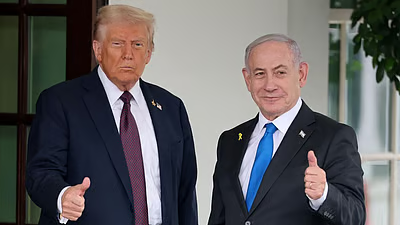
India is an unintended and uninvited party in the growing tension between Israel and the US. US Vice-President J D Vance, who played a low-key, even invisible, role in the Gulf War, sought to shore up support for his president by reminding Israel that its leaders should be loyal to and supportive of Trump.
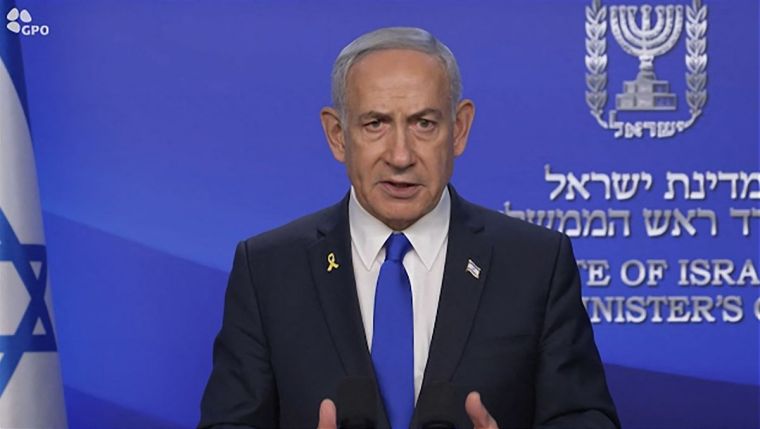
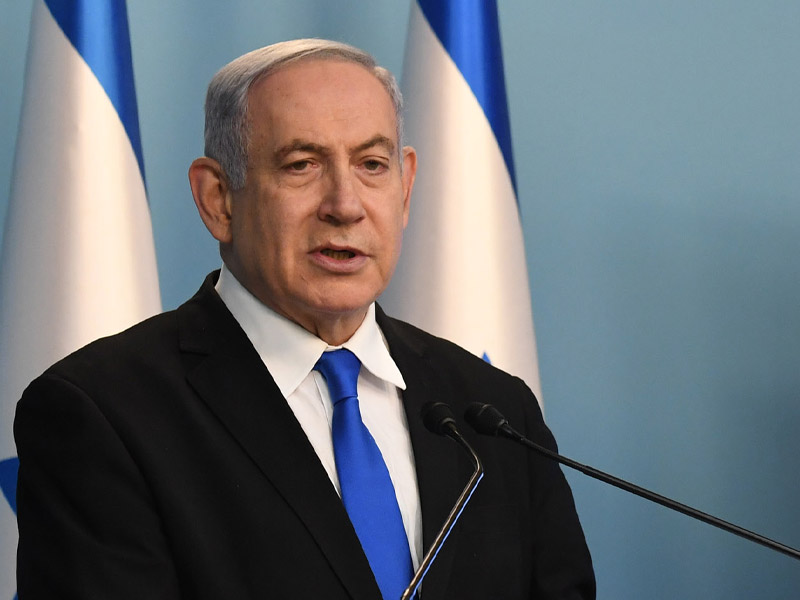
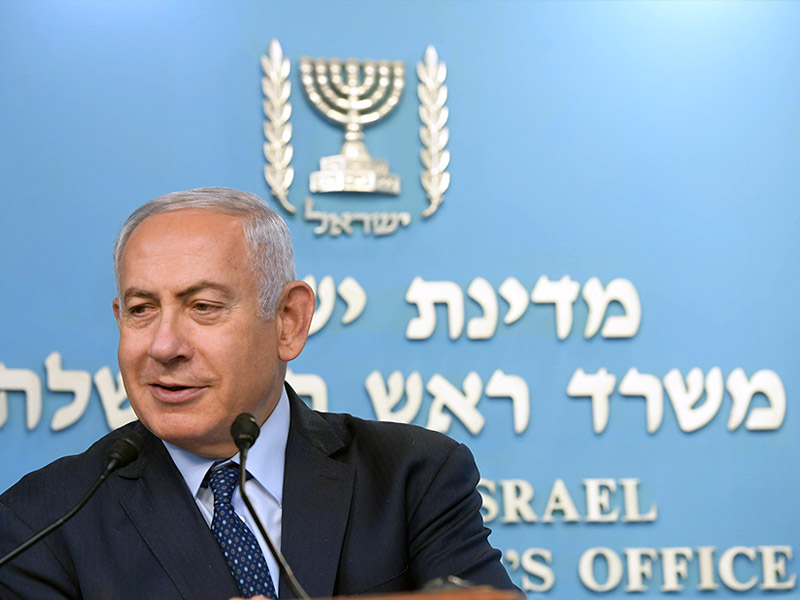
However, even his hardened detractors admit and envy Israeli Prime Minister Benjamin Netanyahu’s oratory skills. He is not the person who gives up the opportunity to put others in their place.
In recent weeks, Israeli tensions with the Trump administration over the West Asia crisis and the freedom of navigation through the Strait of Hormuz have been palpable. Although both sides partnered in the initial days of the offensive against Iran, escalating Iranian attacks against Gulf Arab states gradually heightened US-Israeli tension.
Without significant consultations with Israel, President Trump concluded an MoU with Iran, with “peace in Lebanon” as a major price for the deal.
However, the Islamic Republic of Iran is not ready to rein in — let alone give up — its militant proxy Hezbollah, which is useful for exerting indirect influence over events in the Gulf. The low-cost proxy keeps Israel on tenterhooks, and its influence in Lebanon — though considerably diminished — remains sufficient to delay any normalisation with Israel.
In the US, Israel's continued engagement and violence against Hezbollah in Lebanon only complicated American efforts to ensure freedom of navigation through the Strait of Hormuz. The frustration was palpable, as President Trump himself has been expressing displeasure with Netanyahu and his sabotage.
Thus, reminding of the role of Trump and his indispensability to Israel, Vance said: “If I were in the Cabinet of the Israeli government, I might not be attacking the only powerful ally that I have anywhere left in the entire world.”
Unfortunately for Vance, Netanyahu is not someone who misses an opportunity to retaliate, even if it happens to the US.
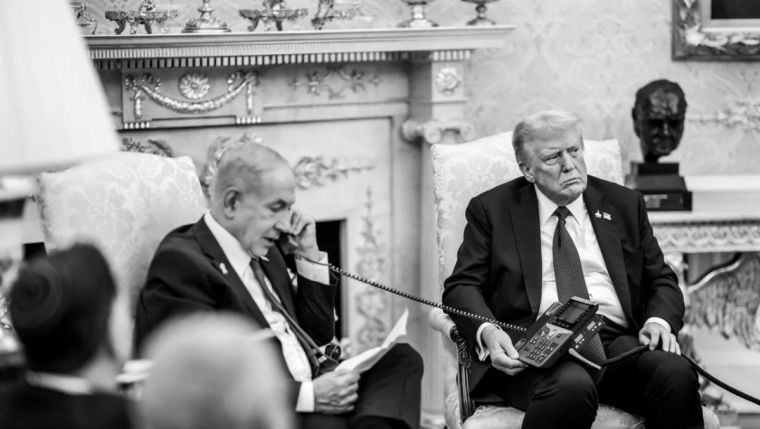
Admitting the importance of the US and President Trump’s staunch support for Israel, he firmly disagreed with Vance and told Israeli media: “We have some other friends, like a small country called India. You know, it has 1.4 billion people, and boy, do we have tremendous support there. You know, I have this Facebook thing, and I’m just flooded by the overwhelming support there.”
Behind the taunt
Bibi’s sarcasm about “a small country called India” is a powerful message aimed at the Trump administration. It reminds Washington that Israel is not alone and, in recent times, has made new, dependable friends.
Though such comments about a country being a “friend” are typically used in a bilateral context, Netanyahu is taunting Trump, who is unhappy with some key Israeli actions regarding the ongoing conflict around the Strait of Hormuz.
Despite the anger and disappointment among a segment of the Indian political class and foreign policy circles, Netanyahu’s public admission that India is a friend of Israel is accurate.
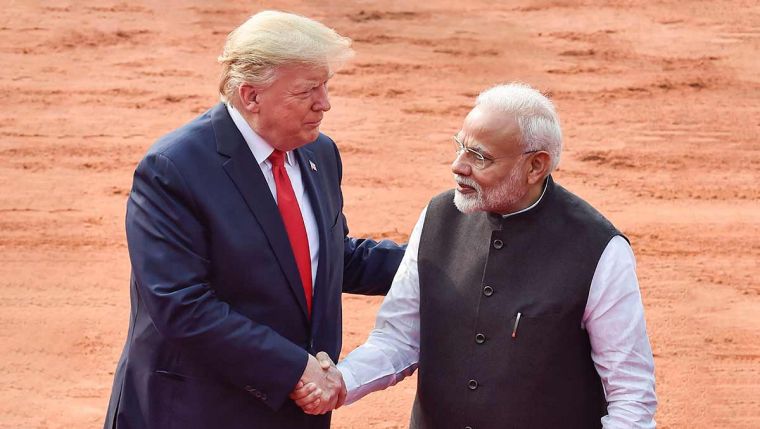
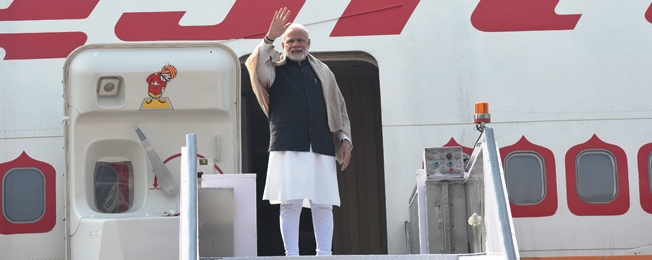
Since assuming office in May 2014, Prime Minister Narendra Modi has developed a personal rapport with Netanyahu, as evidenced by periodic phone calls, social media posts, festive greetings, and personal visits and meetings in third-party countries.
The testing time for this friendship came after the Hamas attacks on October 7, 2023. When the details were still unclear, Modi quickly labelled the attacks “terror” and expressed support for Israel.
Public opinion in the West gradually turned against Israel, and India mirrored this shift as the Opposition focused on the Gaza crisis and the plight of Palestinian civilians trapped in the Israel-Hamas war.
The Modi government remained unwavering and consistently maintained a noticeable tilt in favour of Israel. Not surprisingly, two years later, Modi was vindicated when several Arab-Islamic countries also called the Hamas attack terrorism and demanded the complete disarmament of the militant Palestinian group.
Furthermore, since 2023, India has remained silent on several Israeli actions, including the assassination of several key figures, such as the Iranian Supreme Leader Khamenei. It did not respond to Israel's killing of several Hamas leaders and of Hezbollah chief Hasan Nasrallah. These actions angered a section of the Indian opposition, but Modi was resolute.
Although the Strait of Hormuz is critical to India's energy security, India's supplies come from Gulf Arab countries, not Iran. The perceptible sympathy for Arab countries, such as the UAE, which were targets of Iranian missile and drone attacks, also reflects the convergence of interests among India, Israel, and the UAE.
As Netanyahu told the Israeli journalist: “You have to build new alliances and develop new relationships. That’s what I’m doing right now with India.” One should remember that during his September 2019 election campaign, Netanyahu used Modi’s motif to signal that Israel was not alone.
The strategisation
Befriending Israel does not signal a radical departure from India's traditional approach to the Israeli-Palestinian conflict.
New Delhi continues to view and support the two-state solution as the only viable and realistic path to peace and stability in the wider West Asia. At the same time, two major shifts are evident.
First, under Modi, India abandoned the decades-long UPA policy on Jerusalem. During the visit of Palestinian President Mahmoud Abbas in May 2017, Modi reiterated India's support for “a sovereign, independent, united and viable Palestine, co-existing peacefully with Israel”, but carefully omitted East Jerusalem as the capital of the future Palestinian state.
Secondly, India has been less vocal in pushing for an early resolution to the Israeli-Palestinian conflict. It has been less active in some recent peace initiatives, such as the Gaza Peace Plan, recognising that the two protagonists — Israel and Palestine — are not ready or willing to make the necessary compromises for an honourable settlement. Unlike some domestic critics and noise, the West Asian countries have a better understanding of India's posture.
Therefore, since Prime Minister P V Narasimha Rao established relations in January 1992, Indian-Israeli relations have come a long way. They continue to attract attention, admiration, envy, and consequently, criticism.
Under Modi, they have become the most visible and palpable aspect of Indian foreign policy. Not only has India brought Israel out of the closet under Modi, but it has also de-hyphenated from its support for the Palestine cause, integrated into the larger and changing dynamics in key Gulf Arab states, and been unapologetic. Netanyahu’s public admiration is a recognition of this changed India vis-à-vis West Asia.
The recent conflict in the Gulf over Hormuz highlights two notable aspects of Modi’s policy towards the region: The UAE is vital in the Gulf, and Israel is critical in the wider West Asia. This is confirmed by Netanyahu’s recent subtle yet forceful rebuttal to the Trump Administration.
(The writer teaches contemporary West Asia at Jawaharlal Nehru University)
Note: This article was originally published in Deccan Herald on 12 July 2026 and has been reproduced with the permission of the author. Web Link
As part of its editorial policy, the MEI@ND standardizes spelling and date formats to make the text uniformly accessible and stylistically consistent. The views expressed here are those of the author and do not necessarily reflect the views/positions of the MEI@ND. Editor, MEI@ND: P R Kumaraswamy
Professor P R Kumaraswamy is Honorary Director of MEI@ND.
State funerals are major national events that draw international attention. Because mourning allows .....
It is now clear that the safe passage of ships through the Strait of Hormuz depends oddly on peace i.....
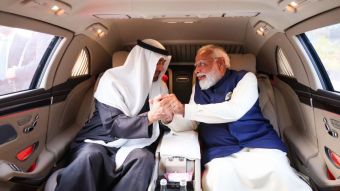
Prime Minister Narendra Modi’s impending stopover in the UAE during his forthcoming visit to E.....
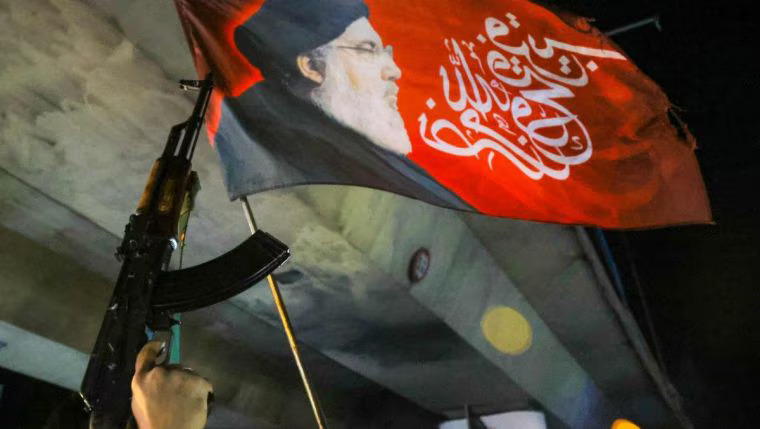
A Mediterranean power’! This is how some depict the Islamic Republic. There is no geogra.....
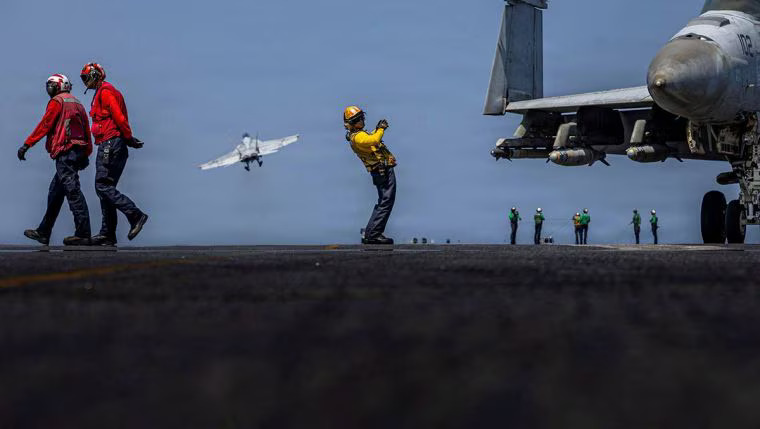
Is the removal of American forces feasible and helpful for the peace and stability of the Pers.....
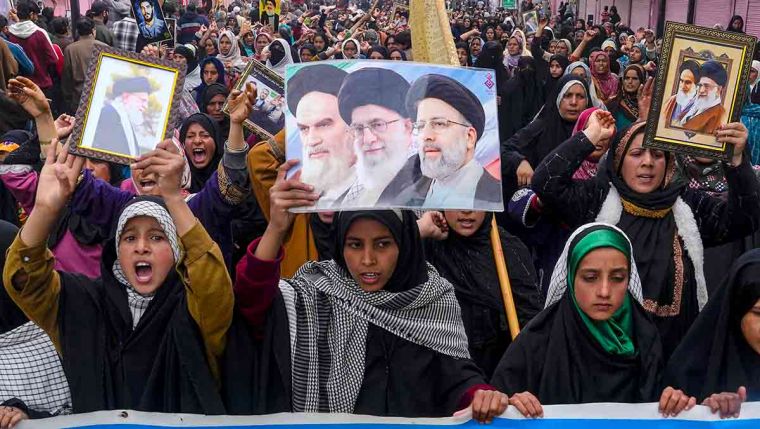
Prime Minister Narendra Modi’s loud silence on the assassination of Iran’s supreme leade.....
The winner always sets the terms for peace. The world, especially US President Donald Trump, is grap.....
ll three key protagonists — Iran, Israel, and the US — are signallin.....
The assassination of the Supreme Leader of the Islamic Republic of Iran, Ayatollah Ali Kha.....
President Donald Trump, never short of rhetorical flourish, has unveiled what he calls a “hist.....
THE WAR IS OVER! President Donald Trump declared loudly and repeatedly, on Air Force One en rou.....
A bizarre adventure that went terribly wrong. The strategic benefits of the September 9 Israeli atta.....
The Ministry of External Affairs recently announced that Paramita Tripathi, from the 2001 batch of t.....
How many Indians are there in the GCC countries? For a long time, this was largely resigned to specu.....
As a growing number of Western states are moving towards recognising the Palestinian State, a powerf.....
As human sufferings in the Gaza Strip show no signs of an early end, India is doggedly committed to .....
Like much of the international community, India was quick to embrace the goals and objectives of the.....
Realpolitik. Pragmatism. Making a virtue out of necessity. Regardless of how one looks at it, the Is.....
All going well—which is a big IF in the ever-turbulent Middle East—the Gaza ceasefire sh.....
Described as a ‘pre-emptive’ strike, Operation Rising Lion is the first armed conflict I.....
The election of Pope Leo LIV as the successor to Francis, with the participation of a hand full of c.....
As the fragile ceasefire came into effect on May 10, Türkiye became the focus of the ire of sev.....
It was the first Friday after the Pahalgam terror attack. Along with a group of students of Jawaharl.....
Vanishing. This is the frequent and inevitable expression when discussing the Christians of the Midd.....
THE PAHALGAM TERRORIST attack has highlighted the cleavages in the Middle East on terrorism. In.....

When peace is viewed as ‘surrender’, there is little one can accomplish. Without an effe.....

The magnitude of the missile attack on Israel carried out by Iran in the early hours of Sunday was u.....
While the details are still emerging, the Hamas attacks from the Gaza Strip on Saturday were well pl.....
The Libyan controversy reminds us of the more significant problem facing Israel. While the scale and.....
64-0! It should be an impressive vote in any country, especially in Israel, where a simple parliamen.....
King Bibi is back! After one year in the Opposition, Benjamin Netanyahu, a close friend of Prime Min.....
Political instability is an integral and inseparable part of Israel’s landscape. For the fifth.....
Even by the Israeli standard of coalition fragility, the Bennett-Lapid government, which completed o.....
Soon to enter its fourth month, the Russian invasion of Ukraine has made irreversible damages to glo.....
The visit of Israeli Prime Minister Naftali Bennett to India scheduled for last week had to be cance.....
The drone attack on Abu Dhabi on Monday (January 17) by the Houthi rebels marks a major escalation o.....
Of late, Israel-Iran shadow-boxing has been getting ominous. If Israel’s diplomatic offensive .....
In early November, Moscow hosted Mohammed Dahlan, a former right-hand man of Palestinian leader Yass.....
Nearly three decades after Prime Minister P V Narasimha Rao broke from the past and normalised relat.....
Earlier it was Pakistan and now China. So whatever India does and does not do externally has to be l.....
In several ways, the Taliban takeover of Afghanistan can be a game-changer in India’s worldvie.....
The Taliban takeover and its fallout exposed the limited diplomatic space for India in its immediate.....

Given the travel restrictions, local lockdown and sluggish economic revival, that over three lakh pe.....
Since 2005, some critical decisions over Iran have been taken by the MEA’s US Division. So que.....
“Bibi dethroned”. This is the expression used in the Israeli media to describe the forma.....
Despite having a woman prime minister in Golda Meir, female political representation in Israel has n.....
The most interesting aspect of the new Bennett-Lapid government in Israel is the emergence of Mansou.....
When it comes to mediating international crises, India’s track record is a mixed bag. In recen.....
Going by the Israeli media, it is clear that the arm-twisting by the Biden Administration forced the.....
Indeed, Hamas is better placed today than it was in January 2006 and the current round of violence i.....
While the international community wants de-escalation and an early end to the conflict, the chances .....
Ending the past silence, US President Joe Biden marked the Armenian Genocide Remembrance Day of Apri.....
The visit of Foreign Minister of Bahrain Abdullatif bin Rashid Al Zayani to India during 6-8 April r.....
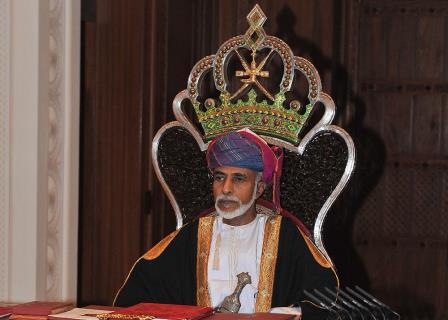
By posthumously bestowing the Gandhi Peace Prize for 2019 upon Sultan Qaboos of Oman, New Delhi seek.....
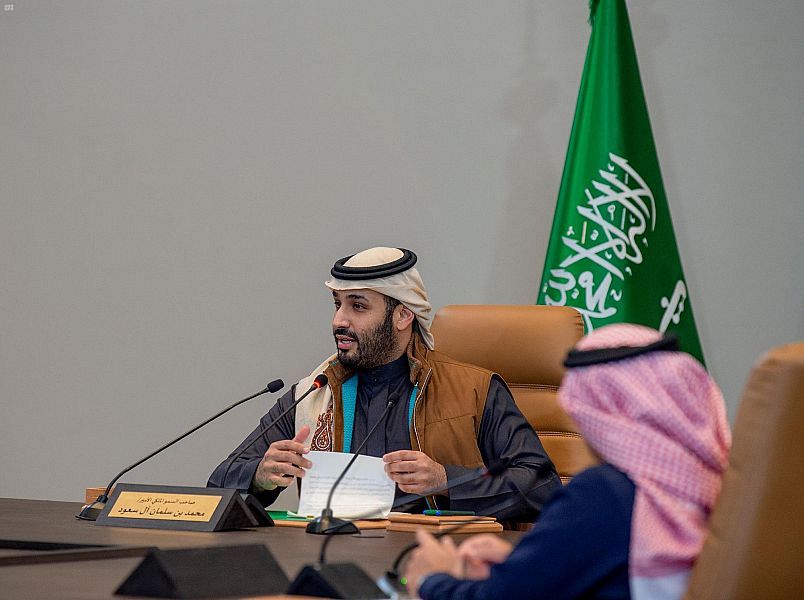
Much to the displeasure and discomfort of Saudi Crown Prince Mohammed bin Salman (more widely known .....
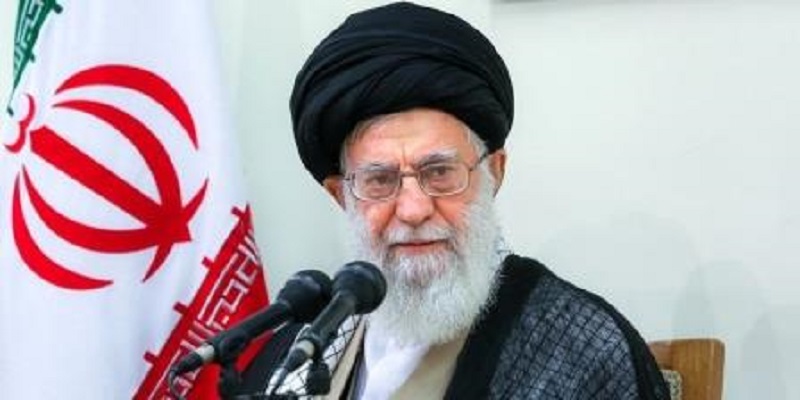
The nomination of Robert Malley, a veteran hand in Washington policy circles, as the Special Envoy f.....
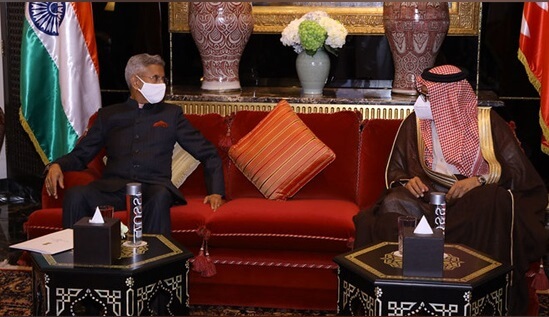
The two-day visit of External Affairs Minister S Jaishankar to the United Arab Emirates last week is.....
United Arab Emirates’ (UAE) decision to normalise relations with Israel is the most dramatic e.....
Declaring victory moments after the polling ends has become the hallmark of Benjamin Netanyahu; and .....
Israel went to polls for the 23rd Knesset on 2nd March. The third parliamentary elections within one.....
With possible removal from office hanging over their heads, US President Donald Trump and Israeli Pr.....

US Secretary of State Mike Pompeo’s sudden and unexpected announcement regarding Israeli settl.....
US President Donald Trump’s decision on imposing sanctions on Turkey has rocked the ever-turbu.....
Prime Minister Narendra Modi’s two-day visit to the Kingdom of Saudi Arabia this week highligh.....
Prime Minister Narendra Modi's reported decision to postpone a planned visit to Turkey comes a c.....
With the sole and notable exception of Pakistan, India's relations with the wider Islamic world .....
For a long time, India’s relationship with its extended neighbourhood in the Persian Gulf was .....
The Israeli legislative or Knesset election last week has turned out to be a rerun of the 9 April on.....
Will 2019 see a third Knesset election? This question is going rounds in Israel as it faces the seco.....
When he called Indian Prime Minister Narendra Modi to congratulate on his re-election with a landsli.....
The resounding re-election of Prime Minister Narendra Modi is a blessing for India's relat.....
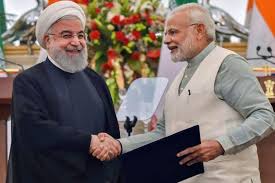
Iran is back in the news and for all the wrong reasons. It has been the unnecessary third .....
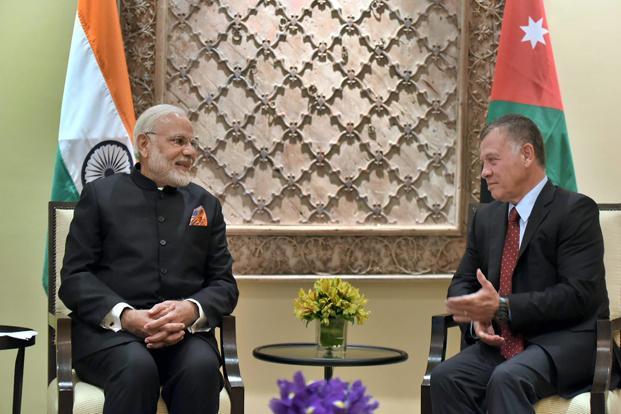
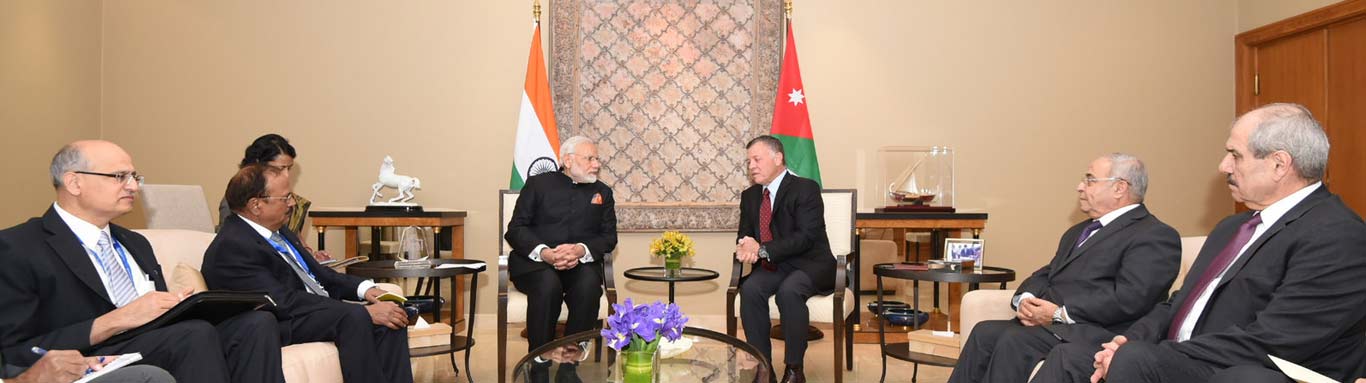
During the close to a century of its existence, the Hashemite Kingdom of Jordan has been, as former .....
In their eagerness to focus on and flag the de-hyphenation of the traditional Israel-Palestinian bin.....
In the closely scrutinised India-Israel relationship, there is little in the public domain that rema.....
You know what, it will go to the dustbin’ my articulate friend was blunt, brutal but.....
Balfour Declaration, A Century Later If one were to make a list of the most influential.....
Professor Bernard Lewis—a towering personality on the Middle Eastern academic landscape—.....
B orn in Poland on 2 August 1923, Szymon Persk who later Hebraised his name as Shimon Peres was the leader.....
W hat What began as a protest by a marginalized vegetable vendor in Sidi Bouzid in Tunisia soon spread lik.....