Breaking

... for openness and credibility....

- MENU
... for openness and credibility....
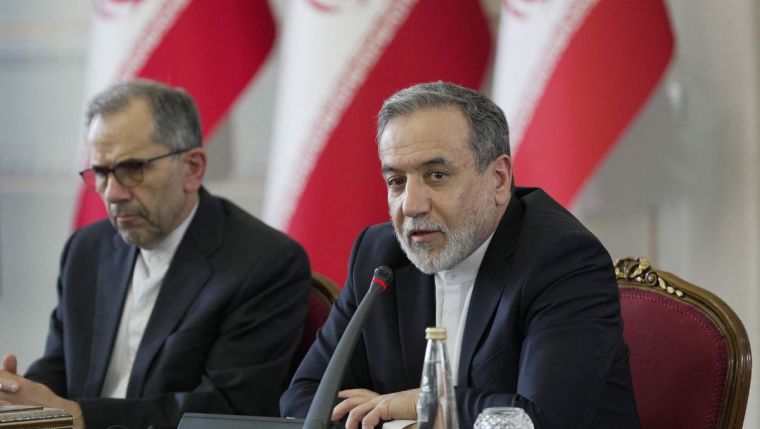
Realpolitik. Pragmatism. Making a virtue out of necessity. Regardless of how one looks at it, the Islamic Republic of Iran has given indications of resuming nuclear talks with Washington. The June 13 Israeli military offensive against Iran came on the eve of the sixth round of the Iran-US nuclear talks in Muscat. However, the 12-day confrontation with Israel forced Iran to make a few dramatic announcements.
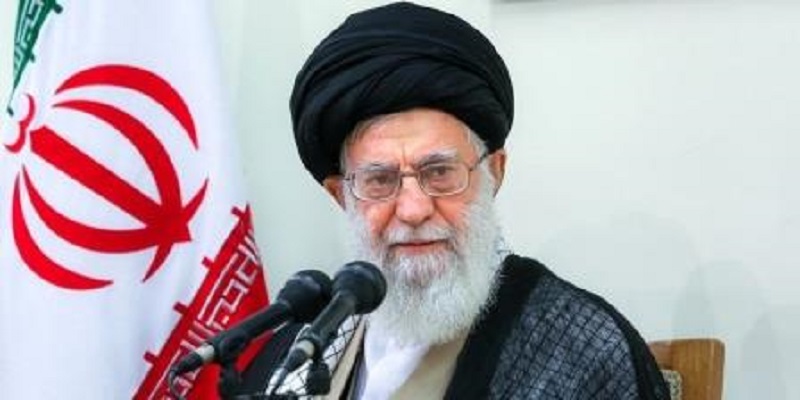
Led by Supreme Leader Ali Khamenei, Iranian leaders claimed ‘victory’ over Israel and ‘a big slap in the face’ of the US. Social media posts associated with the regime claimed several successes in destroying and downgrading Israeli military capabilities and gloated over the failure of Israeli defence systems against Iranian drones and ballistic missiles. Some even underscored that it was Israel, not the Islamic Republic, which sought a ceasefire and that the latter could have continued its military campaign. The uncertainties over the extent and outcomes of the Israel-US bombings of the nuclear facilities further favoured the Iranian rhetoric.
Iran took some politically catchy moves. On 2 July, President Masoud Pezeshkian signed a law suspending cooperation with the International Atomic Energy Agency. There were even suggestions that Iran might even emulate North Korea and take the extreme step of pulling out of the Nuclear Non-Proliferation Treaty. As happened during the run-up to the 2015 nuclear deal, Iran identified European powers as the weaker link. The Foreign Minister warned that any continuation, let alone intensification, of the UN sanctions would only end the European role in the negotiations. Above all, Iran rejected any possibilities of resuming nuclear talks, especially when ‘zero enrichment’ remains the stated public posture of the Trump Administration.
Though ideological, rhetorical and dogmatic, the clergy in Tehran is not suicidal. Its four-decade survival rests on pragmatic adjustments and U-turns. Having declared a perpetual War with Iraq, for example, Ayatollah Khomeini settled for ‘drinking a cup of poison’ and accepted the ceasefire in July 1988. This time, the ‘poison’ came in the form of stark and uncomfortable Middle Eastern reality.
Once missiles stopped flying, Iran found itself regionally isolated. Yes, all the major players wanted an early end to the Israel-Iran confrontation, and several publicly condemned Israel for violating Iranian sovereignty, unilateralism and military offensive. But none really came to Iran's rescue.
With the sole exception of the Houthis of Yemen, even Iranian proxies—Hamas, Hezbollah or PMF in Iraq—did not join the confrontation. Several Arab powers, especially Jordan, Syria and perhaps Saudi Arabia, actively intervened and shot down Iranian missiles when the latter violated their sovereign airspace. Apparently, Israel even used Syrian airspace to carry out attacks on Iran. Above all, the Israeli officials claim that the Trump Administration has not prevented Israel from resuming its military attacks against Iranian nuclear facilities in the future, should the situation arise.
The human intelligence component of the attacks inside Iran meant the Israeli exploitation of popular discontent against the regime. The Afghan refugees—currently estimated at six million—are the prime targets, and in June alone, more than a quarter of a million refugees were deported back to Afghanistan. Although the process began earlier, the 12-day confrontation appears to have accelerated the Iranian resolve. Other powers were equally coy. Having burnt his fingers over Bashar al-Assad, President Vladimir Putin is extremely cautious; for his part, President Xi has upped the ante against Israel over the Gaza Strip but without rallying around a confrontationist Iran. For their part, Iran and its officials explain the confrontation with Israel as the price for its resolute and unwavering support for the Palestinian cause. Thus, in third countries, only Palestinian officials are openly sharing platforms with Iran.
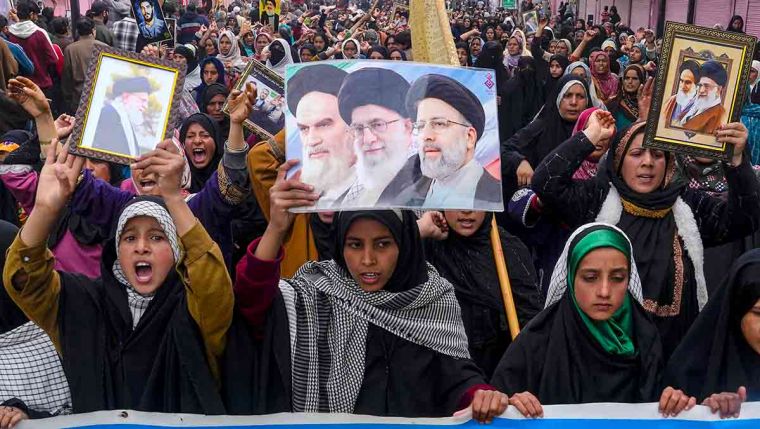
Into its fourth decade, the clergy is facing a host of domestic issues, including economic, political, social, and religious challenges. While a crisis often makes people rally around the flag, silence on the war front only rekindles popular grievances. And the clergy is acutely aware of this.
This is where one should look at the renewed Iranian desire to resume nuclear talks with the US. In the words of Foreign Minister Abbas Araghchi: “We are examining its timing, its location, its form, its ingredients, the assurances it requires.” The resumption of nuclear talks will not be immediate and would involve a host of pre-negotiation sweeteners and post-deal guarantees. But the process has begun. Or, to paraphrase Bernard Shaw, Iran has agreed on principles and is now negotiating the price.
Professor P. R. Kumaraswamy teaches contemporary Middle East at Jawaharlal Nehru University, New Delhi.
Note: This article was originally published in The Week on 13 July 2025 and has been reproduced with the permission of the author. Web Link
As part of its editorial policy, the MEI@ND standardizes spelling and date formats to make the text uniformly accessible and stylistically consistent. The views expressed here are those of the author and do not necessarily reflect the views/positions of the MEI@ND. Editor, MEI@ND: P R Kumaraswamy
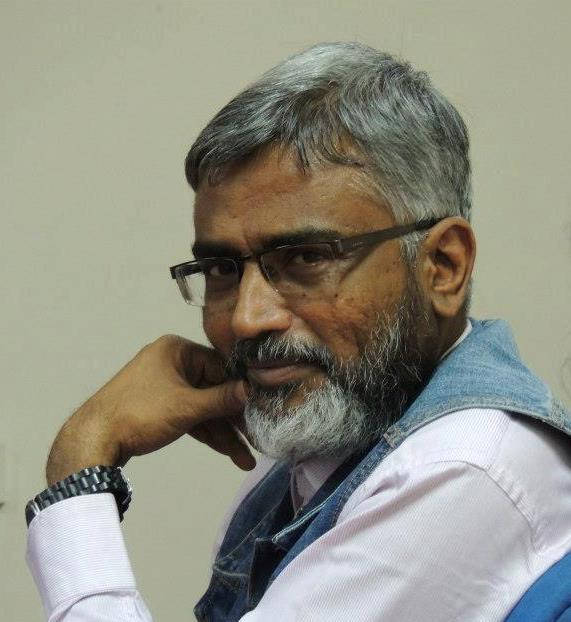
Professor P R Kumaraswamy is Honorary Director of MEI@ND.
India is an unintended and uninvited party in the growing tension between Israel and the US. US Vice.....
State funerals are major national events that draw international attention. Because mourning allows .....
It is now clear that the safe passage of ships through the Strait of Hormuz depends oddly on peace i.....
Prime Minister Narendra Modi’s impending stopover in the UAE during his forthcoming visit to E.....
A Mediterranean power’! This is how some depict the Islamic Republic. There is no geogra.....
Is the removal of American forces feasible and helpful for the peace and stability of the Pers.....
Prime Minister Narendra Modi’s loud silence on the assassination of Iran’s supreme leade.....
The winner always sets the terms for peace. The world, especially US President Donald Trump, is grap.....
ll three key protagonists — Iran, Israel, and the US — are signallin.....
The assassination of the Supreme Leader of the Islamic Republic of Iran, Ayatollah Ali Kha.....
President Donald Trump, never short of rhetorical flourish, has unveiled what he calls a “hist.....
THE WAR IS OVER! President Donald Trump declared loudly and repeatedly, on Air Force One en rou.....
A bizarre adventure that went terribly wrong. The strategic benefits of the September 9 Israeli atta.....
The Ministry of External Affairs recently announced that Paramita Tripathi, from the 2001 batch of t.....
How many Indians are there in the GCC countries? For a long time, this was largely resigned to specu.....
As a growing number of Western states are moving towards recognising the Palestinian State, a powerf.....
As human sufferings in the Gaza Strip show no signs of an early end, India is doggedly committed to .....
Like much of the international community, India was quick to embrace the goals and objectives of the.....
All going well—which is a big IF in the ever-turbulent Middle East—the Gaza ceasefire sh.....
Described as a ‘pre-emptive’ strike, Operation Rising Lion is the first armed conflict I.....
The election of Pope Leo LIV as the successor to Francis, with the participation of a hand full of c.....
As the fragile ceasefire came into effect on May 10, Türkiye became the focus of the ire of sev.....
It was the first Friday after the Pahalgam terror attack. Along with a group of students of Jawaharl.....
Vanishing. This is the frequent and inevitable expression when discussing the Christians of the Midd.....
THE PAHALGAM TERRORIST attack has highlighted the cleavages in the Middle East on terrorism. In.....
When peace is viewed as ‘surrender’, there is little one can accomplish. Without an effe.....
The magnitude of the missile attack on Israel carried out by Iran in the early hours of Sunday was u.....
While the details are still emerging, the Hamas attacks from the Gaza Strip on Saturday were well pl.....
The Libyan controversy reminds us of the more significant problem facing Israel. While the scale and.....
64-0! It should be an impressive vote in any country, especially in Israel, where a simple parliamen.....
King Bibi is back! After one year in the Opposition, Benjamin Netanyahu, a close friend of Prime Min.....
Political instability is an integral and inseparable part of Israel’s landscape. For the fifth.....
Even by the Israeli standard of coalition fragility, the Bennett-Lapid government, which completed o.....
Soon to enter its fourth month, the Russian invasion of Ukraine has made irreversible damages to glo.....
The visit of Israeli Prime Minister Naftali Bennett to India scheduled for last week had to be cance.....
The drone attack on Abu Dhabi on Monday (January 17) by the Houthi rebels marks a major escalation o.....
Of late, Israel-Iran shadow-boxing has been getting ominous. If Israel’s diplomatic offensive .....
In early November, Moscow hosted Mohammed Dahlan, a former right-hand man of Palestinian leader Yass.....
Nearly three decades after Prime Minister P V Narasimha Rao broke from the past and normalised relat.....
Earlier it was Pakistan and now China. So whatever India does and does not do externally has to be l.....
In several ways, the Taliban takeover of Afghanistan can be a game-changer in India’s worldvie.....
The Taliban takeover and its fallout exposed the limited diplomatic space for India in its immediate.....

Given the travel restrictions, local lockdown and sluggish economic revival, that over three lakh pe.....
Since 2005, some critical decisions over Iran have been taken by the MEA’s US Division. So que.....
“Bibi dethroned”. This is the expression used in the Israeli media to describe the forma.....
Despite having a woman prime minister in Golda Meir, female political representation in Israel has n.....
The most interesting aspect of the new Bennett-Lapid government in Israel is the emergence of Mansou.....
When it comes to mediating international crises, India’s track record is a mixed bag. In recen.....
Going by the Israeli media, it is clear that the arm-twisting by the Biden Administration forced the.....
Indeed, Hamas is better placed today than it was in January 2006 and the current round of violence i.....
While the international community wants de-escalation and an early end to the conflict, the chances .....
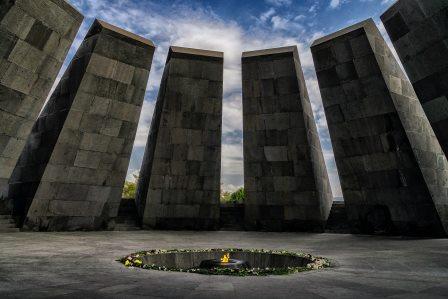
Ending the past silence, US President Joe Biden marked the Armenian Genocide Remembrance Day of Apri.....
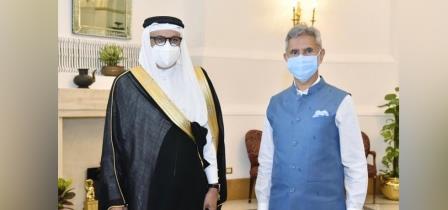
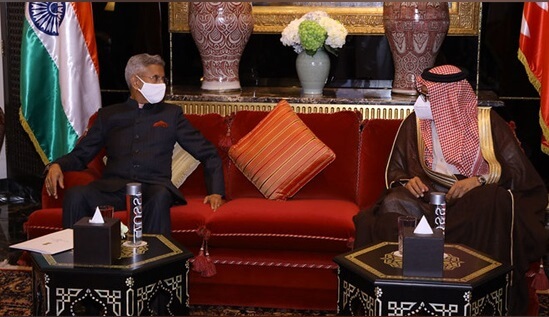
The visit of Foreign Minister of Bahrain Abdullatif bin Rashid Al Zayani to India during 6-8 April r.....
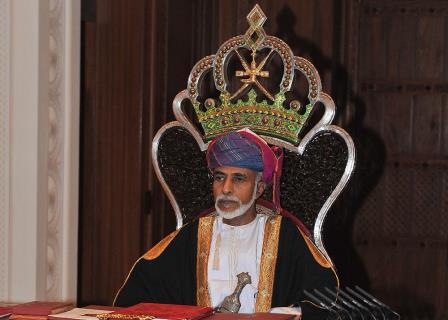
By posthumously bestowing the Gandhi Peace Prize for 2019 upon Sultan Qaboos of Oman, New Delhi seek.....
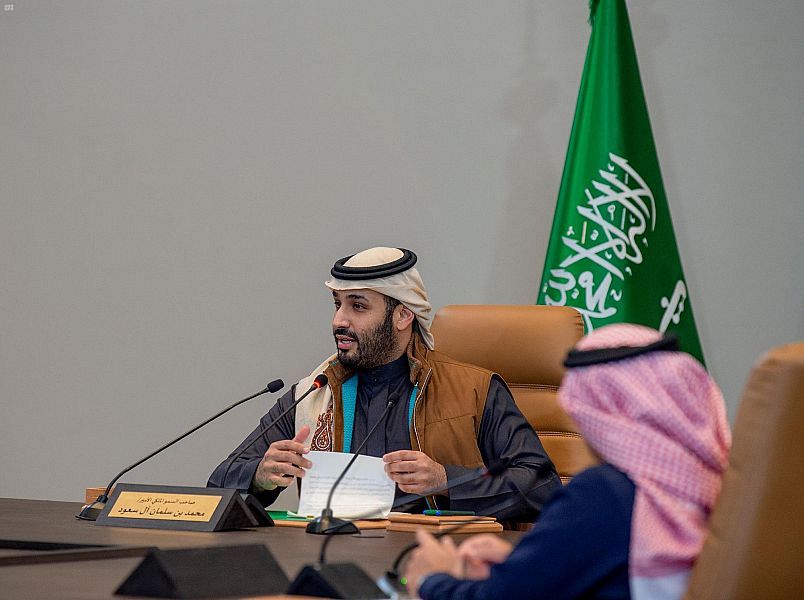
Much to the displeasure and discomfort of Saudi Crown Prince Mohammed bin Salman (more widely known .....
The nomination of Robert Malley, a veteran hand in Washington policy circles, as the Special Envoy f.....
The two-day visit of External Affairs Minister S Jaishankar to the United Arab Emirates last week is.....
United Arab Emirates’ (UAE) decision to normalise relations with Israel is the most dramatic e.....
Declaring victory moments after the polling ends has become the hallmark of Benjamin Netanyahu; and .....
Israel went to polls for the 23rd Knesset on 2nd March. The third parliamentary elections within one.....
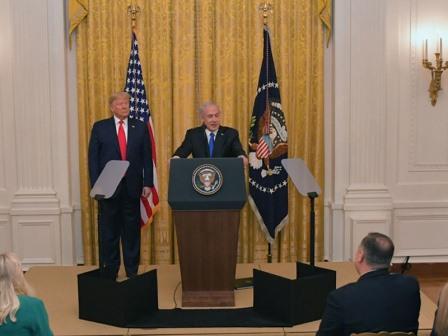
With possible removal from office hanging over their heads, US President Donald Trump and Israeli Pr.....
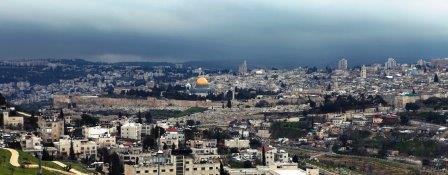
US Secretary of State Mike Pompeo’s sudden and unexpected announcement regarding Israeli settl.....
US President Donald Trump’s decision on imposing sanctions on Turkey has rocked the ever-turbu.....
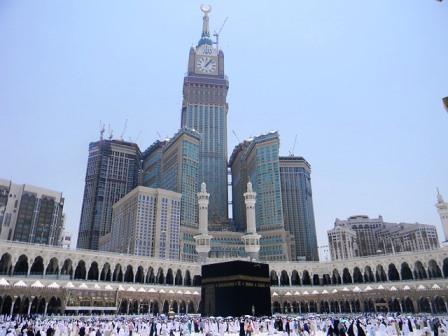
Prime Minister Narendra Modi’s two-day visit to the Kingdom of Saudi Arabia this week highligh.....
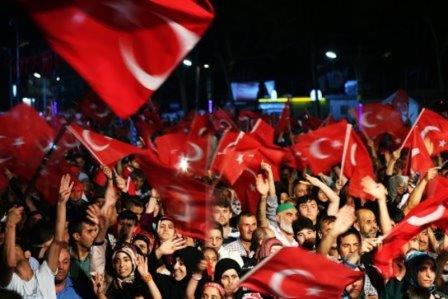
Prime Minister Narendra Modi's reported decision to postpone a planned visit to Turkey comes a c.....
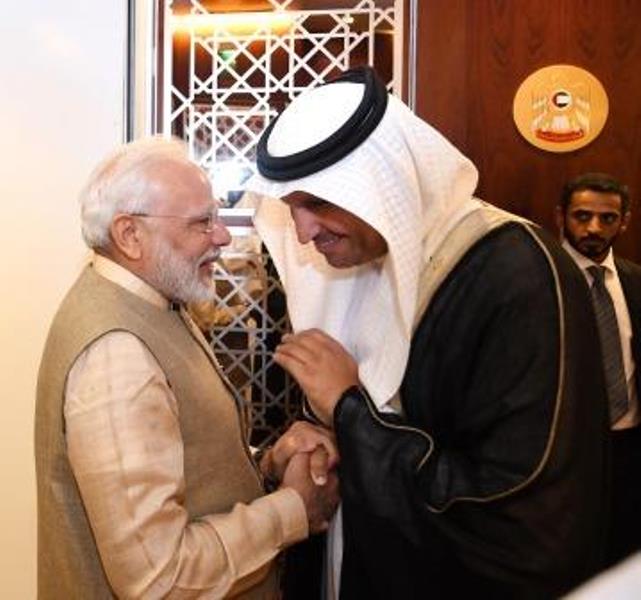
With the sole and notable exception of Pakistan, India's relations with the wider Islamic world .....
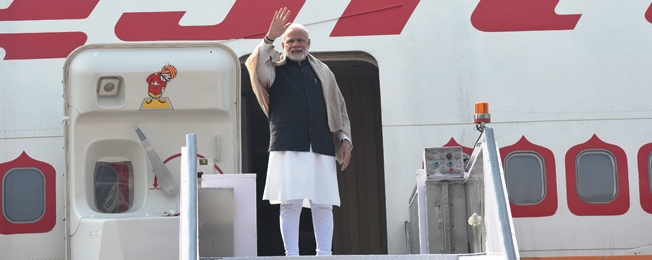
For a long time, India’s relationship with its extended neighbourhood in the Persian Gulf was .....
The Israeli legislative or Knesset election last week has turned out to be a rerun of the 9 April on.....
Will 2019 see a third Knesset election? This question is going rounds in Israel as it faces the seco.....
When he called Indian Prime Minister Narendra Modi to congratulate on his re-election with a landsli.....
The resounding re-election of Prime Minister Narendra Modi is a blessing for India's relat.....
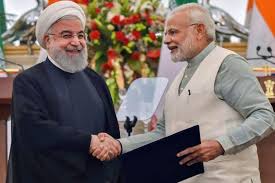
Iran is back in the news and for all the wrong reasons. It has been the unnecessary third .....
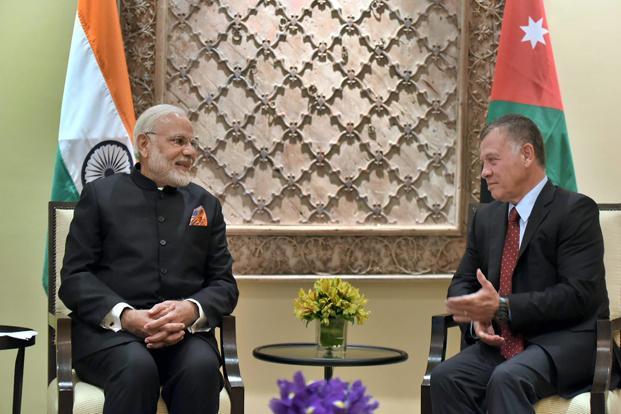
During the close to a century of its existence, the Hashemite Kingdom of Jordan has been, as former .....
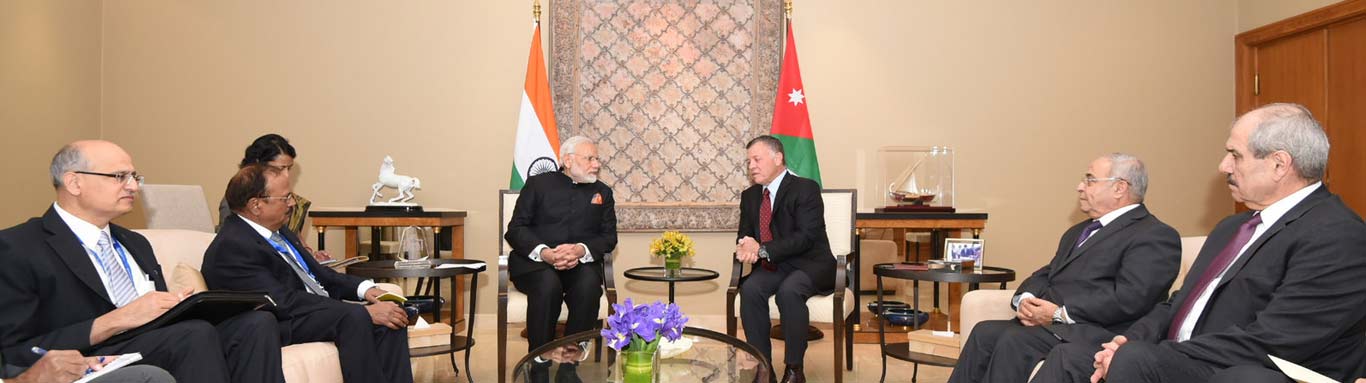
In their eagerness to focus on and flag the de-hyphenation of the traditional Israel-Palestinian bin.....
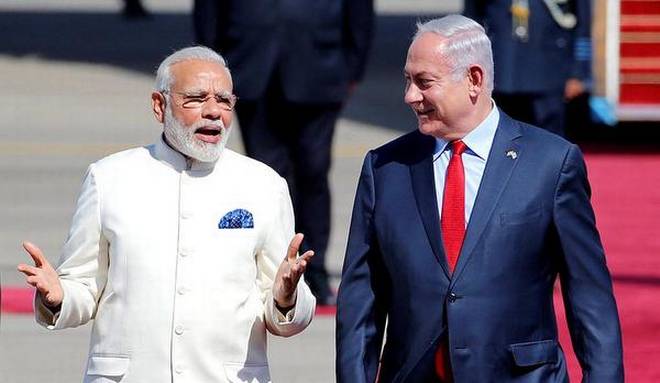
In the closely scrutinised India-Israel relationship, there is little in the public domain that rema.....
You know what, it will go to the dustbin’ my articulate friend was blunt, brutal but.....

Balfour Declaration, A Century Later If one were to make a list of the most influential.....
Professor Bernard Lewis—a towering personality on the Middle Eastern academic landscape—.....
B orn in Poland on 2 August 1923, Szymon Persk who later Hebraised his name as Shimon Peres was the leader.....
W hat What began as a protest by a marginalized vegetable vendor in Sidi Bouzid in Tunisia soon spread lik.....