Breaking

... for openness and credibility....

- MENU
... for openness and credibility....
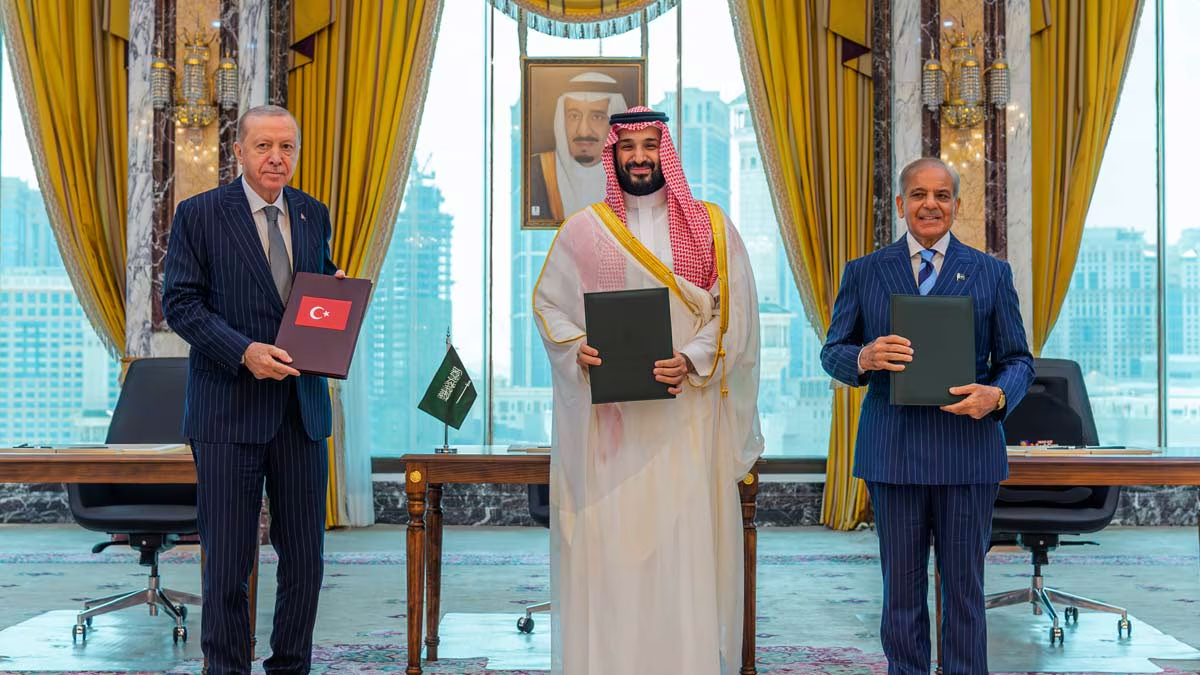
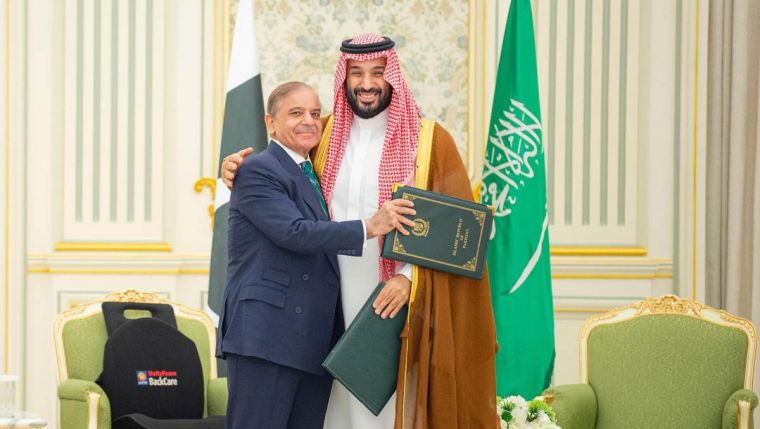
When Saudi Arabia, Türkiye, and Pakistan signed their trilateral defence pact in Mecca on August 7, the accompanying joint statement shows something unusual for a security treaty. It grounds hard-power commitment in soft, civilisational language. The agreement is described as flowing from "the enduring bonds of brotherhood and Islamic solidarity" among the three states, signed at Al-Safa Palace in the holiest city in Islam. That combination, religious framing paired with an explicit disclaimer of religious exclusivity, is the real story here, and it's best understood through international relations (IR) theory rather than through the "new Muslim bloc" headlines which have become pervasive currently.
A classical realist reading entirely takes away the religious language. What binds this pact together is a conventional aggregation of capability. Saudi money, Turkish defence-industrial capacity (proven UAV and electronic warfare exports), and the Pakistani military workforce and nuclear-armed strategic depth are bound by a shared interest in deterrence amid the protracted regional geopolitical conflict. As such, "Islamic solidarity" appears just decorative language wrapped around an interest-based bargain that would exist under any label. That reading is incomplete. It can't explain why states bother with the wrapping at all, when a purely transactional communiqué would serve the same material purpose.
This is not wrong. However, it assumes that language holds little to no weight and that talk has no independent effect on how states relate to one another. Constructivist IR theory challenges this assumption. For Alexander Wendt, shared identity isn't a byproduct of alliance. It's a constitutive input. States don't just cooperate because interests align. It is the language of cooperation that actively builds the "we" that makes deeper cooperation possible. When the joint communiqué calls Saudi Arabia, Türkiye, and Pakistan "brothers" who are bound by faith, it does more than describe a treaty. It attempts to construct a security community rather than the standard defence pact it implies. That's a stronger form of glue than shared threat perception alone provides.
But constructing that shared "we" abroad only works if the story also sells at home, which means every joint statement is really being written for two audiences at once. Robert Putnam's two-level-games framework is useful to understand this. Every joint statement is written for two audiences at once, i.e., foreign counterparts and domestic constituencies. Framing religion earns favourable legitimacy back home. Erdo?an has a political base motivated by neo-Ottomanizeand pan-Islamists. The Islamic Republic is the constitutional name of Pakistan. The use of religious lexicon is a low-cost means of selling a major strategic commitment without commencing a harder debate on the specifics of military obligations. For the Saudi monarchy, this language is not merely ornamental. MBS’s regime draws part of its legitimacy from the King’s title as Custodian of the Two Holy Mosques, even as Vision 2030 steers the kingdom towards a more secular, diversified international identity. Forging a security agreement utilising that older, sacred language allows each leader to offer a hard bargain as continuity with a known civilisational story rather than as a risky new departure.
Jennifer Mitzen's ontological security argument contends that states desire more than just physical safety. The use of a religious-civilisational language allows the three nations to place the agreement within a narrative of solidarity between the Muslim world and the states themselves. Moreover, this terminology does not restrict the agreement to being intentionally anti-Iran or anti-Israel.
The framing of the phrase "Islamic solidarity" with "not aimed at any specific actor" is interesting here. This, implicitly, preserves deniability and flexibility in moments of crisis. And that’s a fair craft when practising diplomacy and alliance. That said, the Islamic framing of the pact is somewhat overstated. Saudi Arabia and Türkiye have both rejected the "Islamic NATO" label and have maintained that the agreement is not directed against any specific country.
The notion of Pakistan invoking the pact in response to an Indian counter-terror operation carries lesser significance. Both Saudi Arabia and Türkiye have substantial strategic and economic ties with India, and the political cost of materially backing Pakistan in an India-Pakistan conflict would be considerable. If the agreement affects India's strategic calculations, it is more because it introduces uncertainty than because it intervenes in a likely outcome. As far as Tehran is concerned, it is likely to view the official narrative of a "purely defensive, non-sectarian pact open to all" as an elaborate diplomatic cover. The geopolitical reality remains that the Mecca Agreement has potentially transformed a bilateral Gulf dispute into a pan-regional structural containment mechanism.
Mohammed Shoaib Raza is a doctoral candidate at the Centre for West Asian Studies, Jawaharlal Nehru University, New Delhi.
Note: This article was originally published in The Week on 08 August 2026 and has been reproduced with the permission of the author. Web Link
As part of its editorial policy, the MEI@ND standardizes spelling and date formats to make the text uniformly accessible and stylistically consistent. The views expressed here are those of the author and do not necessarily reflect the views/positions of the MEI@ND. Editor, MEI@ND: P R Kumaraswamy

Mohammed Shoaib Raza is a doctoral candidate at the Centre for West Asian Studies, Jawaharlal Nehru University, New Delhi
Turkey's ruling Justice and Development Party (AKP) marked its 25th anniversary on 14 August wit.....
On the morning of 23 July, as Jews observed Tisha B'Av, the annual fast mourning the destruction.....
Environmental concerns are often expressed in secular terms, such as economics, policy, or technolog.....
State funerals have long served as highly staged arenas for funeral diplomacy, where non-verbal comm.....
The multi-day state funeral of Ayatollah Ali Khamenei, which began in Tehran on July 3, four months .....
This year marked the 1366th lunar anniversary (1366 AH) of the Battle of Karbala, fought in 680 CE (.....

Today, debates about artificial intelligence (AI) are often preoccupied with questions of bias, algo.....
The just-concluded annual Muslim pilgrimage, Hajj, has long been a symbol of communal unity, drawing.....
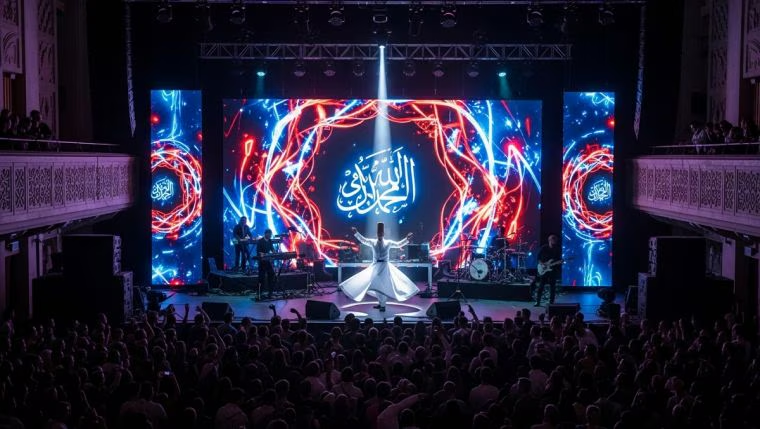
Across the cities of the Middle East, from Cairo to Casablanca, a sound is currently reshaping youth.....

In the Middle East, the sociopolitical landscape has undergone a noticeable digital transformation i.....
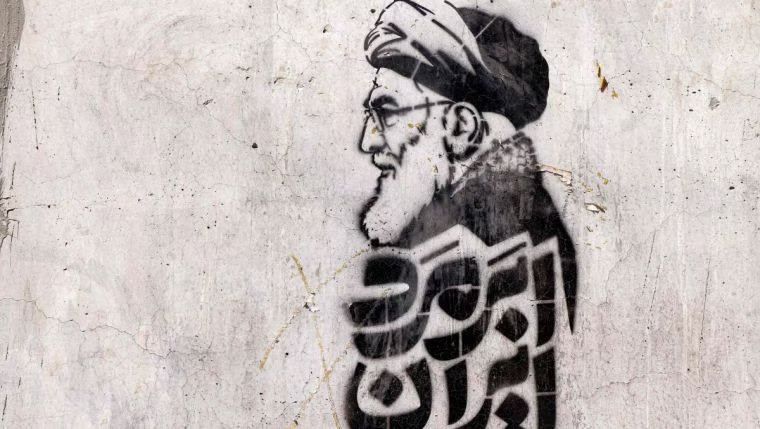
The Shia community observes Arba’een, the traditional fortieth day of mourning for the m.....
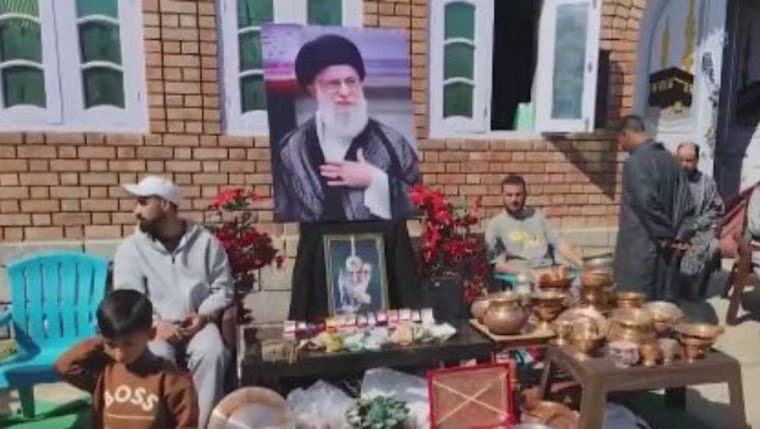
During the ongoing Iran conflict, the Kashmir Valley saw a massive grassroots donation drive. Report.....
In an unexpected move, the Al-Aqsa Mosque was closed this Eid al-Fitr, marking the first time since .....
On March 8, the Islamic Republic of Iran reached a historic moment that defined the practical .....
One of the recently released documents from the US Department of Justice, made public under the Epst.....
Atwi Atwi, a high-portfolio official of Al-Jama’a al-Islamiya (AJI) and a former mayor of a mu.....
On January 29, the European Union (EU) designated the Islamic Revolutionary Guard Corps (IRGC) as a .....

The social media and news outlets have lately been flooded with news and the latest updates from the.....
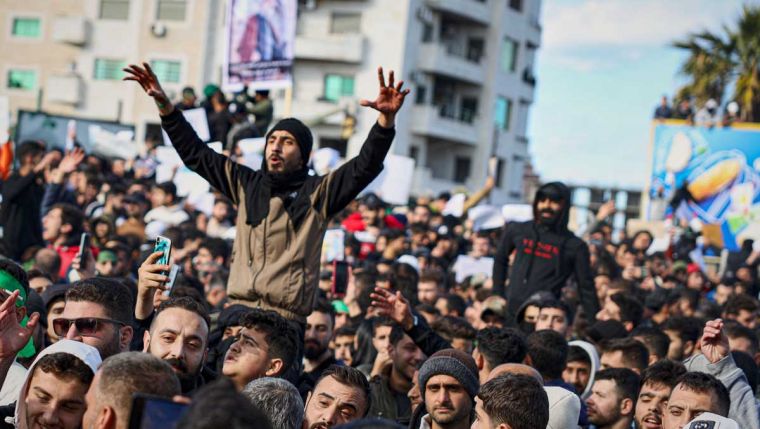
On December 26, at least eight people, who were part of the Friday congregation prayers, were killed.....
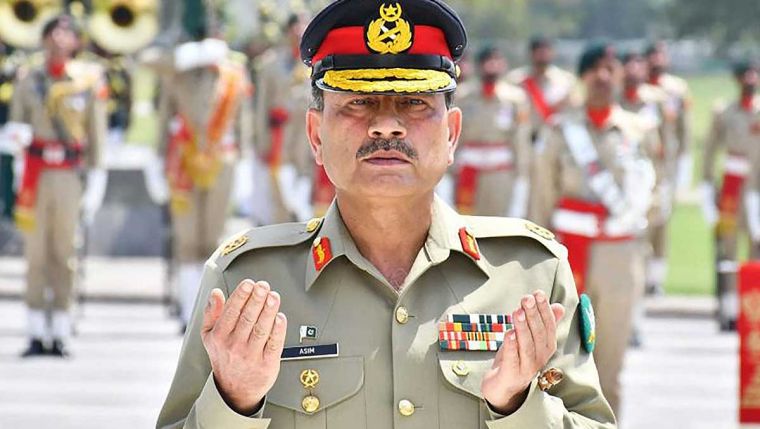
During the recent National Ulema and Mashaikh Convention in Islamabad on December 10, Chief of the A.....
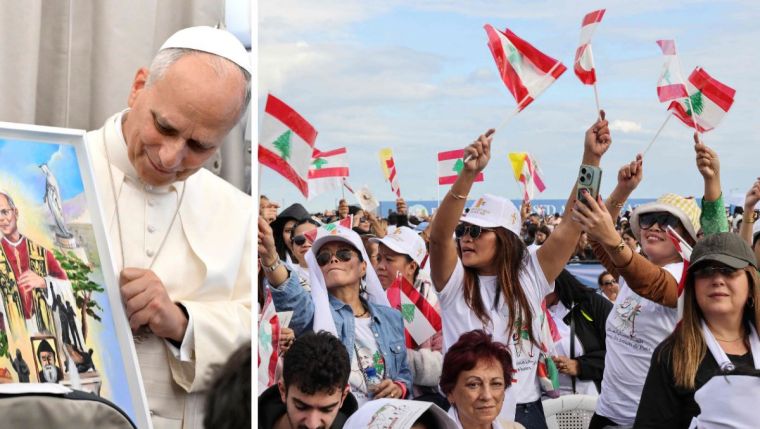
With the three-day visit to Beirut, Lebanon, Pope Leo XIV concluded his first international visit si.....

Discussions regarding the nature of Iranian nationalism and its expression by the Islamic Repu.....
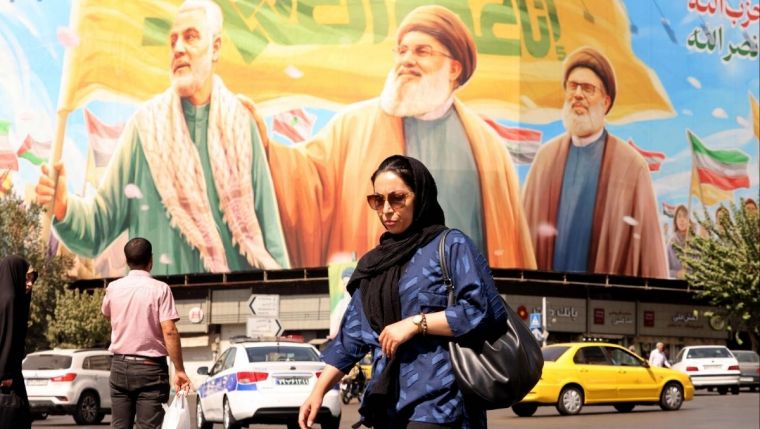
In recent weeks, the Israel Defence Forces (IDF) have escalated its military operations in sou.....
Last Tuesday, the Syrian security forces launched a major operation in the Idlib Province against th.....
Last Wednesday, the State Security Court of Jordan handed down prison sentences of varying lengths t.....
International relations pundits were quick in relegating the joint communiqué of the Emergenc.....
In addition to several geopolitical considerations, religion is a necessity for the major powers in .....