Breaking

... for openness and credibility....

- MENU
... for openness and credibility....

Today, debates about artificial intelligence (AI) are often preoccupied with questions of bias, algorithmic fairness, and governance. Rarely, however, do these conversations examine how AI appears when evaluated through religious or metaphysical ontologies, particularly those rooted in Islamic cosmology. For clarity: one does not seek to establish the truth of Islamic metaphysical claims. Rather, it examines how AI appears when evaluated through the conceptual categories of classical Islamic cosmology, drawing primarily on the works of contemporary intellectual thinkers.
When the AI is viewed through the lens of Islamic cosmology, it does not merely simulate human intelligence but enacts a metaphysical inversion by subordinating the sacred hierarchy of being to the cold logic of computational systems. AI's artificialisation of the world is not a neutral technical achievement. At its roots, it is a disruption of the hierarchy of existence that Islamic cosmology holds to be inviolable.
A core concept in Islamic cosmology is nizam, the idea that creation is not a haphazard assemblage of matter but an intentional whole, hierarchically ordered in accordance with divine wisdom (hikmah ). In this cosmology, creation is neither flat nor interchangeable, and each level has its rank, function, and orientation towards the 'Divine'. Seyyed Hossein Nasr presents an elaborate religio-philosophical vision. He argues that reality has organised levels that descend from the divine principle through angelic intellects to a rational human soul. According to Nasr, nothing exists in a vacuum. Everything that exists horizontally participates in a web of vertical relations that defines the sacred cosmos. The concept of mizan, balance and measure, complements nizam. God establishes the heavens and sets the mizan (Quran 55:7-9). The universe is maintained in a perfect balance by God, who is simultaneously physical, moral, and metaphysical. Knowledge cannot be separated from ontological rank within this worldview.
To understand why AI poses a cosmological issue from the viewpoint of Islamic intellectual traditions, one must first understand what it actually does to the world it purports to know. Before any domain, a human face, a legal ruling, a verse of the Quran, or a tree can be processed by an AI system, it must be converted into discrete, quantifiable data. Islamic philosophical critiques of abstraction would interpret this process as a reduction of reality rather than a neutral representation. Contrary to popular imagination, AI does not expand computational reach outward to meet the world as it is.
Artificial intelligence can be seen as a process of compressing various aspects of the world into something computable. The end result is a flattened reduction of reality within a black box of weighted parameters. These parameters, while useful, do not reflect reality in a true sense, as they do not encounter it. The philosophical consequence is what may be called ontological severance. Within this framework, digitisation can be understood as stripping entities of their relational embeddedness, their living connections to tradition, community, moral context, and ultimately to the Divine. It becomes a data point, unconnected to its place in the sacred order. This severance is especially grave when AI is applied to the Islamic sciences. Disciplines such as tafsir, fiqh, and tasawwuf are not merely bodies of information. They are structured along a hermeneutic chain: from the human interpreter, through living tradition, to the scriptures. Thus, from the perspective of Islamic hermeneutics, AI risks collapsing this vertical chain into a horizontal pattern-matching process, producing outputs that may appear coherent but are cosmologically hollow.
Artificial intelligence only imitates the external manifestations of thought. It produces writing, makes pronouncements, and issues interpretations, but it is structurally incapable of thinking. It has no intention and bears no moral blame. Because AI lacks niyyah and taklif, an Islamic theological anthropology will not consider it an intellect per se. This produces a precise and grave inversion. Within this framework, delegating epistemic authority to AI represents an inversion of the proper hierarchy by displacing the human intellect as the authoritative locus of knowledge and judgment, substituting a soulless mechanism in its place.
From Nasr’s perspective, AI can be seen as restructuring humanity’s relationship with reality in computational rather than sacred categories. Syed Muhammad Naquib Al-Attas offers a more refined diagnosis through ta'dib , the right ordering of knowledge according to its proper hierarchical and relational situatedness. For Al-Attas, one simply cannot have knowledge without adab , the disciplined, ethically attuned orientation of the knower to the known. According to Al-Attas’s framework, knowledge generated without adab risks becoming epistemically disorderly.
What is at stake in this debate is not merely theological. It encompasses not only the institutional and pedagogical but also the civilisational. AI-generated fatawa may seem textually coherent from this perspective, but they lack the epistemic and spiritual conditions associated with valid interpretation. All of this boils down to the issue of hikmah (wisdom). Artificial intelligence can store data and produce text that seems sensible and helpful. However, wisdom per se cannot be programmed, at least in the Islamic tradition. It calls for a self-situated within a specific order.
The author is a doctoral candidate at the Centre for West Asian Studies, Jawaharlal Nehru University, New Delhi.
Note: This article was originally published in The Week on 27 June 2026 and has been reproduced with the permission of the author. Web Link
As part of its editorial policy, the MEI@ND standardizes spelling and date formats to make the text uniformly accessible and stylistically consistent. The views expressed here are those of the author and do not necessarily reflect the views/positions of the MEI@ND. Editor, MEI@ND: P R Kumaraswamy
Mohammed Shoaib Raza is a doctoral candidate at the Centre for West Asian Studies, Jawaharlal Nehru University, New Delhi
Turkey's ruling Justice and Development Party (AKP) marked its 25th anniversary on 14 August wit.....
When Saudi Arabia, Türkiye, and Pakistan signed their trilateral defence pact in Mecca on Augus.....
On the morning of 23 July, as Jews observed Tisha B'Av, the annual fast mourning the destruction.....
Environmental concerns are often expressed in secular terms, such as economics, policy, or technolog.....
State funerals have long served as highly staged arenas for funeral diplomacy, where non-verbal comm.....
The multi-day state funeral of Ayatollah Ali Khamenei, which began in Tehran on July 3, four months .....
This year marked the 1366th lunar anniversary (1366 AH) of the Battle of Karbala, fought in 680 CE (.....
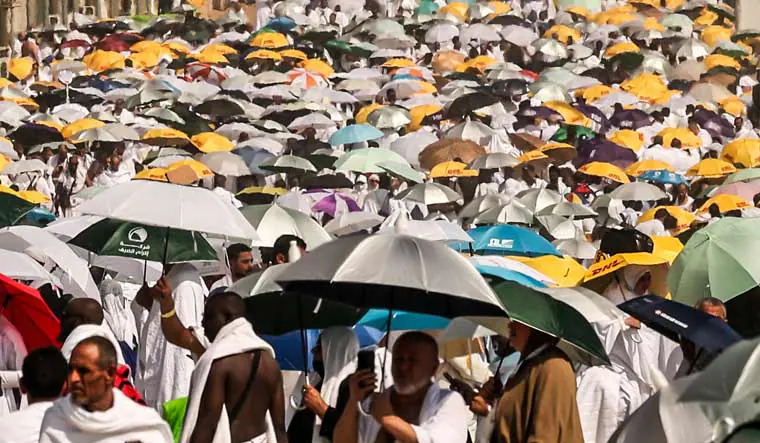
The just-concluded annual Muslim pilgrimage, Hajj, has long been a symbol of communal unity, drawing.....
Across the cities of the Middle East, from Cairo to Casablanca, a sound is currently reshaping youth.....

In the Middle East, the sociopolitical landscape has undergone a noticeable digital transformation i.....
The Shia community observes Arba’een, the traditional fortieth day of mourning for the m.....
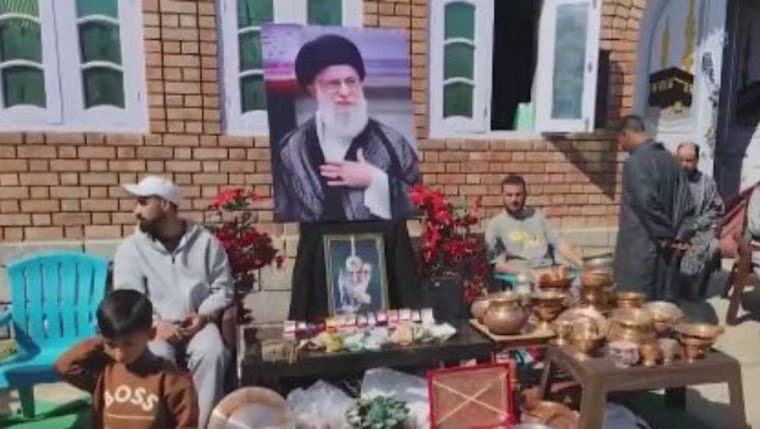
During the ongoing Iran conflict, the Kashmir Valley saw a massive grassroots donation drive. Report.....
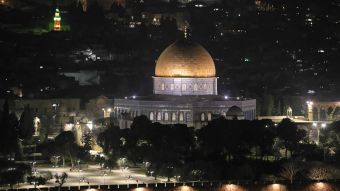
In an unexpected move, the Al-Aqsa Mosque was closed this Eid al-Fitr, marking the first time since .....
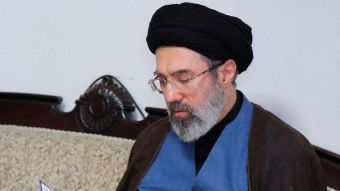
On March 8, the Islamic Republic of Iran reached a historic moment that defined the practical .....
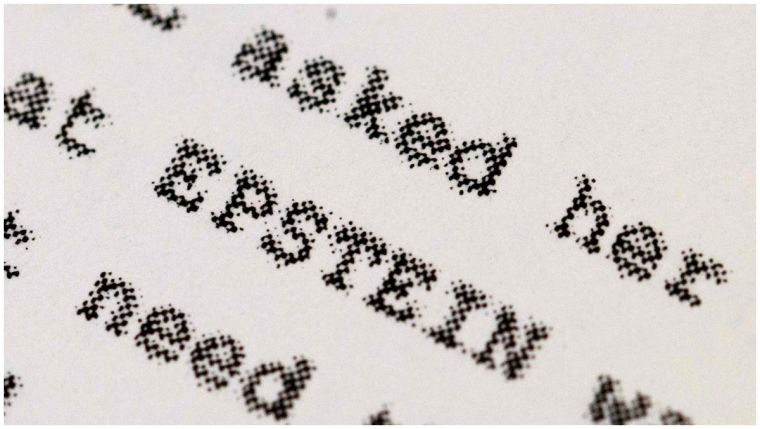
One of the recently released documents from the US Department of Justice, made public under the Epst.....

Atwi Atwi, a high-portfolio official of Al-Jama’a al-Islamiya (AJI) and a former mayor of a mu.....
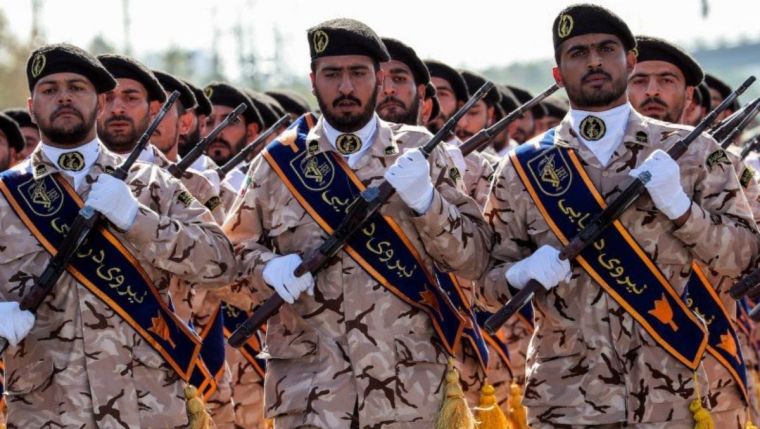
On January 29, the European Union (EU) designated the Islamic Revolutionary Guard Corps (IRGC) as a .....

The social media and news outlets have lately been flooded with news and the latest updates from the.....
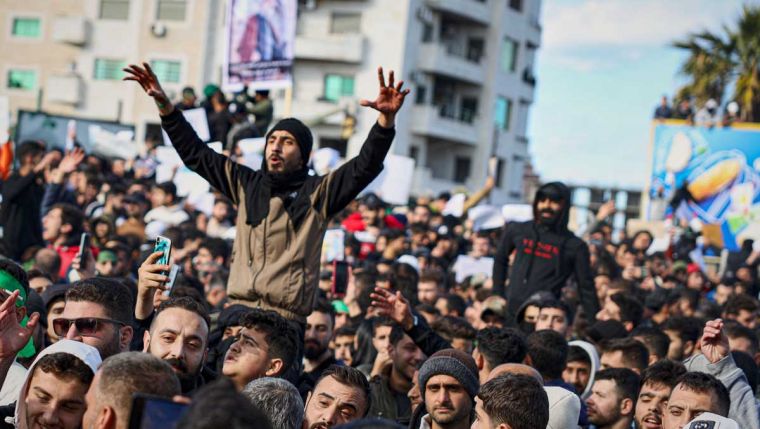
On December 26, at least eight people, who were part of the Friday congregation prayers, were killed.....

During the recent National Ulema and Mashaikh Convention in Islamabad on December 10, Chief of the A.....
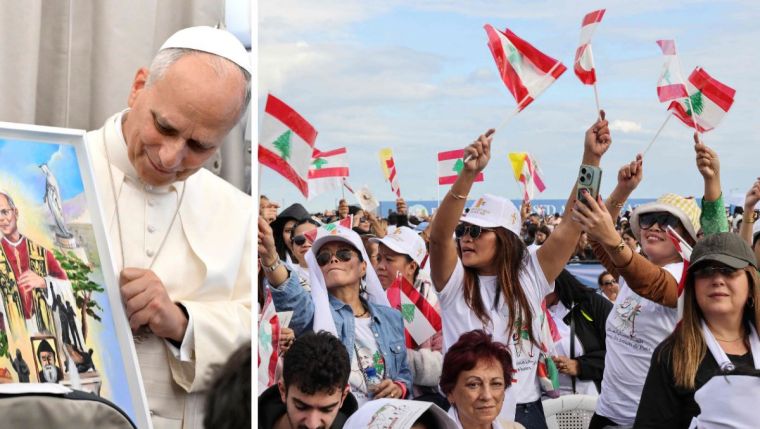
With the three-day visit to Beirut, Lebanon, Pope Leo XIV concluded his first international visit si.....

Discussions regarding the nature of Iranian nationalism and its expression by the Islamic Repu.....
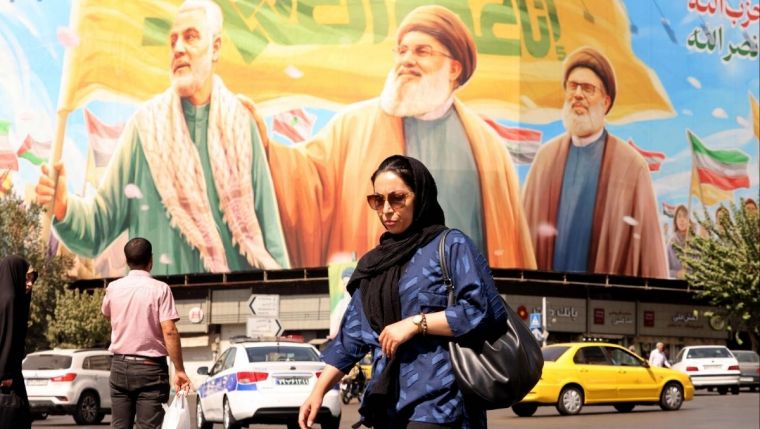
In recent weeks, the Israel Defence Forces (IDF) have escalated its military operations in sou.....
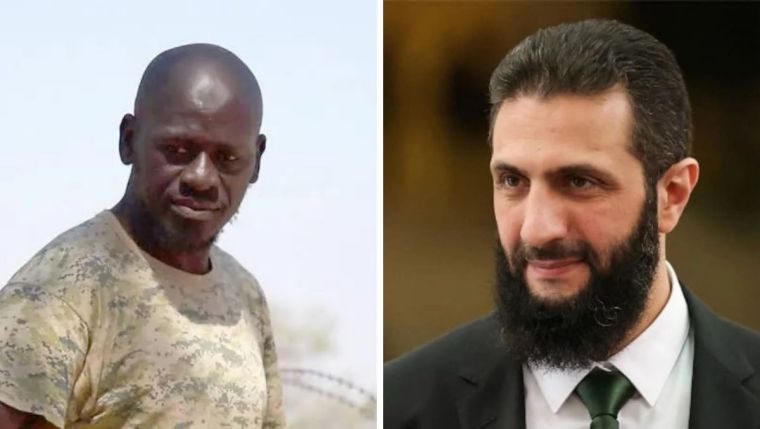
Last Tuesday, the Syrian security forces launched a major operation in the Idlib Province against th.....
Last Wednesday, the State Security Court of Jordan handed down prison sentences of varying lengths t.....
International relations pundits were quick in relegating the joint communiqué of the Emergenc.....
In addition to several geopolitical considerations, religion is a necessity for the major powers in .....