Breaking

... for openness and credibility....

- MENU
... for openness and credibility....
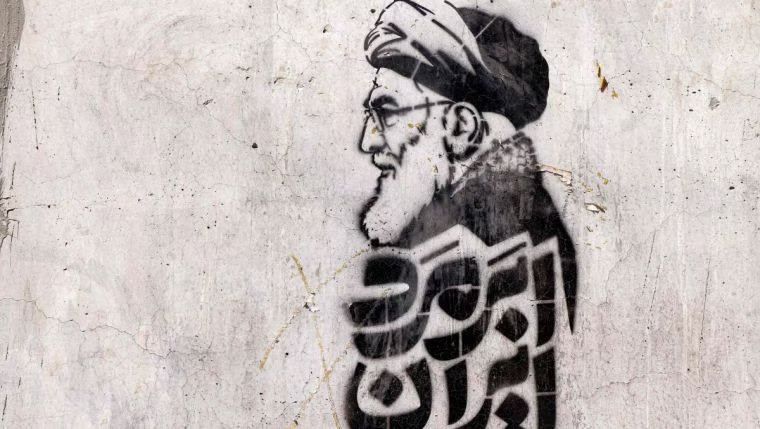
The Shia community observes Arba’een, the traditional fortieth day of mourning for the martyrdom of Ayatollah Khamenei and his family, on April 8. Currently, the atmosphere of faith is a blend of theology and crisis. By framing the recent assassinations as sacred martyrdom, the Islamic Republic aims to turn a geopolitical shock into a narrative of divine-endorsed resilience.
In Shia Islam, Arba’een (the Arabic word for forty) signifies the spiritual and psychological completion of a cycle. The tenth day of Muharram is remembered as Ashura, symbolising the trauma of sacrifice, but the fortieth day, in a sense, turns grief into an established form of memory. Typically, Arba’een is observed on the 20th of Safar, the second month of the Islamic calendar. During this time, millions of followers—including non-Shia and non-Muslims—walk from Najaf to Karbala, Iraq, to visit the shrine of Imam Hussain.
This 40-day period is based on a belief system where the soul reaches a state of maturity. Besides this, the number 40 holds significance in Islamic metaphysics and is often linked to the spiritual growth of Prophet Muhammad and the Quranic journeys of Moses. Historically, Arba’een marks the return of Imam Hussain’s captive family to Karbala, symbolising the triumph of the victorious over the defeated. In this context, it is the peak of mourning because it turns a tragic event into a lasting revolutionary symbol. By the fortieth day, the story of the deceased shifts from a private loss to a communal "witnessing" (Shahada). In this way, it becomes a vital tool for political and spiritual mobilisation. This enables the community to preserve the legacy of the martyr and to renew their dissent, if any, ensuring that the martyr's impact remains a lasting socio-political force rather than fading away.
Building on the completion of the forty-day cycle, the theology of emotions in Shiism suggests that grief (Gham) is not a passive state of despair but an active, sacred force. This view transforms the individual’s internal sorrow into a collective sense of resistance. Therefore, by engaging in ritualised lamentation, the believer not only mourns a loss but also connects their understanding to the historical tragedy of the Ahl al-Bayt. In this way, personal trauma becomes a form of defiance.
In today's political landscape, this emotional background acts as a powerful tool for mobilization. The same pattern is often seen when, through poetry, Latmiya, and public processions, the Iranian state channels the intense feeling of Gham into a disciplined, revolutionary language.
At the same time, it is equally important to recognise that in the intellectual history of Shiism, martyrdom is never just a fixed historical event; it remains a living paradigm. While the 40th-day rituals look back to the tragedy of the death, the theological perspective moves forcefully forward, turning the grief of mourning into the "Red Shi’ism" of active resistance instead of concentrating on “Black Shi’ism,” which views Shi’ism as a religion of mourning. This view was mainly promoted by thinkers like Ali Shariati, who argues that the martyr (Shaheed) is a witness who, through their death, reveals the oppressor's illegitimacy. The Iranian government has effectively applied this paradigm to the killing of Ayatollah Khamenei and his family by detaching the loss from a specific place, transforming it from a local setback into an eternal struggle.
Beyond its theological importance, the Arba’een period marks a particularly volatile time at the intersection of religion and mass mobilisation. This creates a high-risk environment for several reasons. Firstly, decentralized public gatherings occur on such a large scale that they become a logistical nightmare for security forces and a tempting target for opponents of the system. Additionally, the previously mentioned moral theology of emotions can quickly shift from ritual mourning to acts of defiance. This is because a community is already energised by a sense of ‘injustice’. Furthermore, the intense atmosphere of grief and devotion to martyrdom, along with associated memories, can greatly influence sensitivities and escalate minor conflicts. Therefore, although Arba’een is a peaceful and spiritual event, its scale, symbolism, and geopolitical setting can cause underlying tensions to surface and sometimes lead to conflict or violence.
As such, Arba’een serves as a bridge between history and politics. The forty-day cycle, which evolves from a personal rite of passage into a powerful tool of statecraft, ensures that the remembrance of the martyr remains disruptive in collective social memory. Therefore, in today’s geopolitically charged environment, the combination of religious devotion and political mobilisation weaves a compelling narrative of resilience. This effectively turns the vulnerability of crisis into a lasting model of revolutionary resistance.
Mohammed Shoaib Raza is a doctoral candidate at the Centre for West Asian Studies, Jawaharlal Nehru University, New Delhi.
Note: This article was originally published in The Week on 8 April 2026 and has been reproduced with the permission of the author. Web Link
As part of its editorial policy, the MEI@ND standardizes spelling and date formats to make the text uniformly accessible and stylistically consistent. The views expressed here are those of the author and do not necessarily reflect the views/positions of the MEI@ND. Editor, MEI@ND: P R Kumaraswamy

Mohammed Shoaib Raza is a doctoral candidate at the Centre for West Asian Studies, Jawaharlal Nehru University, New Delhi
Turkey's ruling Justice and Development Party (AKP) marked its 25th anniversary on 14 August wit.....
When Saudi Arabia, Türkiye, and Pakistan signed their trilateral defence pact in Mecca on Augus.....
On the morning of 23 July, as Jews observed Tisha B'Av, the annual fast mourning the destruction.....
Environmental concerns are often expressed in secular terms, such as economics, policy, or technolog.....
State funerals have long served as highly staged arenas for funeral diplomacy, where non-verbal comm.....
The multi-day state funeral of Ayatollah Ali Khamenei, which began in Tehran on July 3, four months .....
This year marked the 1366th lunar anniversary (1366 AH) of the Battle of Karbala, fought in 680 CE (.....

Today, debates about artificial intelligence (AI) are often preoccupied with questions of bias, algo.....
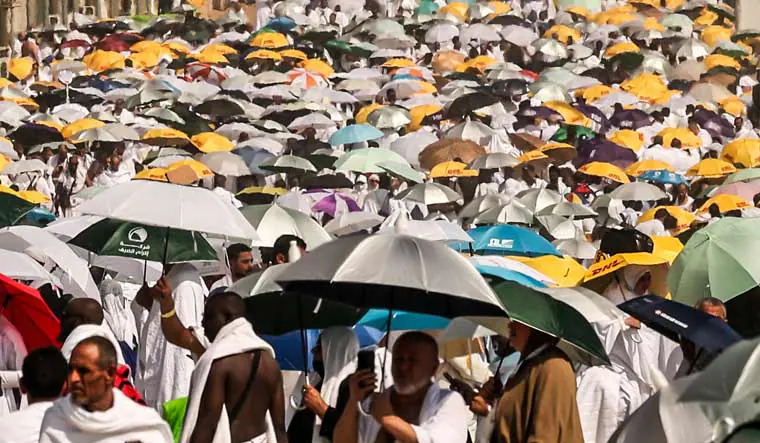
The just-concluded annual Muslim pilgrimage, Hajj, has long been a symbol of communal unity, drawing.....
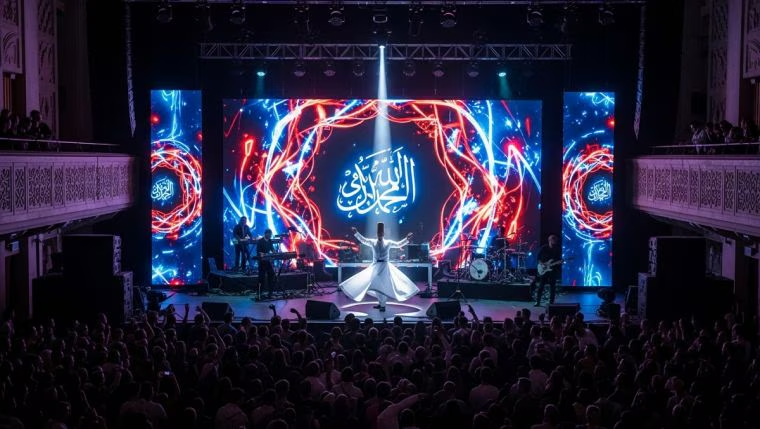
Across the cities of the Middle East, from Cairo to Casablanca, a sound is currently reshaping youth.....

In the Middle East, the sociopolitical landscape has undergone a noticeable digital transformation i.....
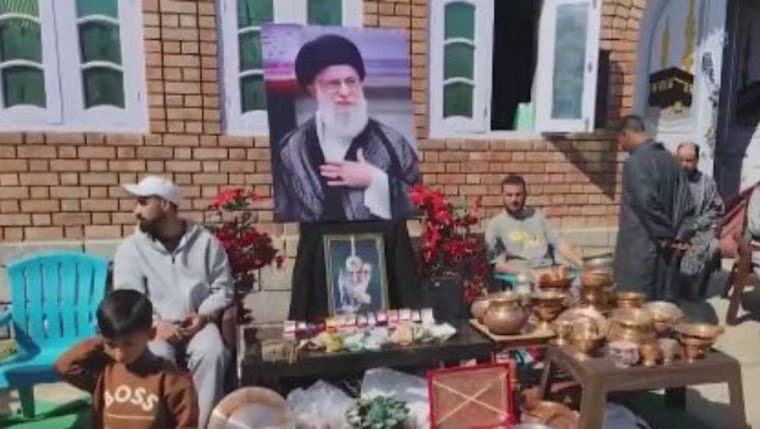
During the ongoing Iran conflict, the Kashmir Valley saw a massive grassroots donation drive. Report.....
In an unexpected move, the Al-Aqsa Mosque was closed this Eid al-Fitr, marking the first time since .....
On March 8, the Islamic Republic of Iran reached a historic moment that defined the practical .....

One of the recently released documents from the US Department of Justice, made public under the Epst.....
Atwi Atwi, a high-portfolio official of Al-Jama’a al-Islamiya (AJI) and a former mayor of a mu.....
On January 29, the European Union (EU) designated the Islamic Revolutionary Guard Corps (IRGC) as a .....

The social media and news outlets have lately been flooded with news and the latest updates from the.....
On December 26, at least eight people, who were part of the Friday congregation prayers, were killed.....
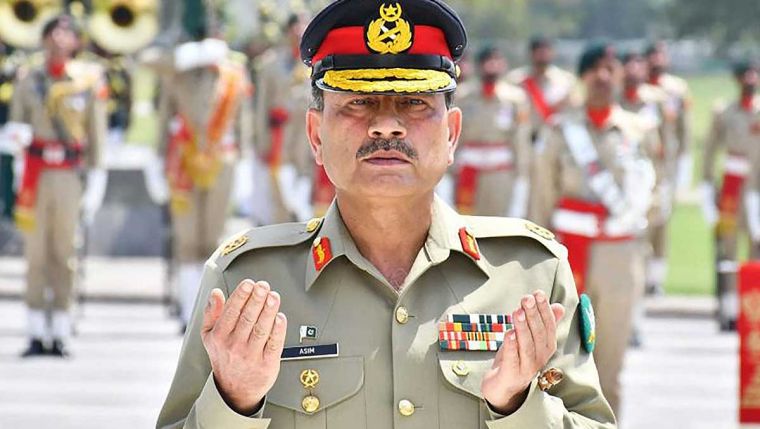
During the recent National Ulema and Mashaikh Convention in Islamabad on December 10, Chief of the A.....
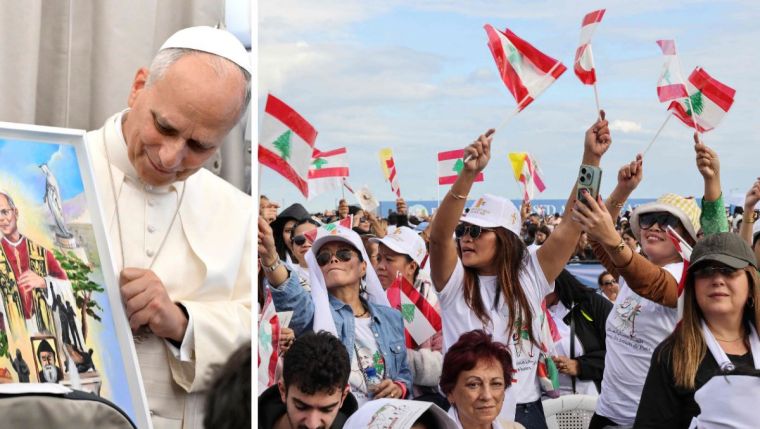
With the three-day visit to Beirut, Lebanon, Pope Leo XIV concluded his first international visit si.....

Discussions regarding the nature of Iranian nationalism and its expression by the Islamic Repu.....
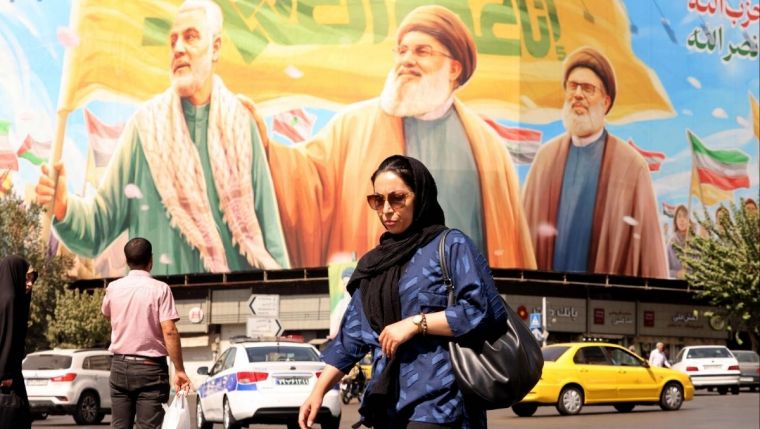
In recent weeks, the Israel Defence Forces (IDF) have escalated its military operations in sou.....
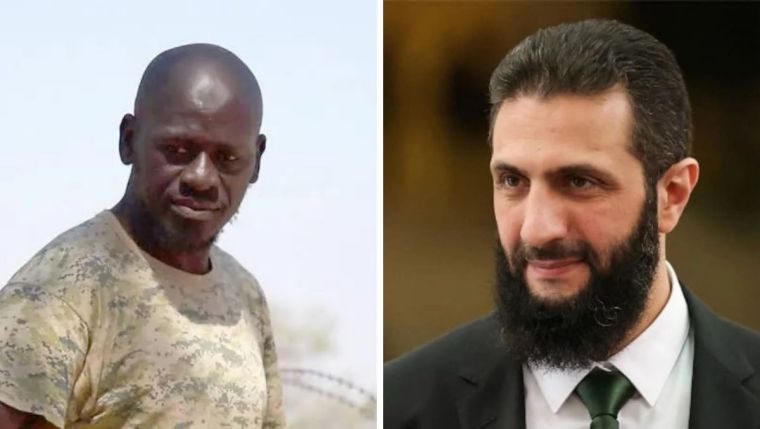
Last Tuesday, the Syrian security forces launched a major operation in the Idlib Province against th.....
Last Wednesday, the State Security Court of Jordan handed down prison sentences of varying lengths t.....
International relations pundits were quick in relegating the joint communiqué of the Emergenc.....
In addition to several geopolitical considerations, religion is a necessity for the major powers in .....