Breaking

... for openness and credibility....

- MENU
... for openness and credibility....

Many would be surprised that Lebanon has the second-largest gold reserves in the Middle East, behind only Saudi Arabia. It is estimated to be 286.8 metric tonnes, worth approximately US$45-46 billion, given recent gold prices of US$5,000 per ounce. Yet Lebanon remains one of the most heavily indebted countries in the world, with a debt-to-GDP ratio among the highest. The severe fiscal crisis in late 2019 led to the collapse of the banking system. The country suffered a nearly US$70 billion loss in its financial sector, further aggravated by billions of dollars lost due to the war between Israel and Hezbollah in 2024. A shortage of foreign currency, systemic mismanagement, frozen assets, and currency collapse have devalued assets, including bank deposits. Many people lost access to their bank deposits and turned to cash transactions, which led to the growth of parallel financial networks and informal cash systems, some linked to Hezbollah and other political groups.
The new government formed in February 2025 was negotiating a reform package with the IMF, which requires the government to maintain a low public debt level to reduce its lending risk. Recently, a draft law was introduced to create a legal framework for restructuring the banking sector and to allocate about US$70 billion in crisis-related losses among the state, the central bank, Banque Du Liban (BDL), and the commercial banks. It sets out rules for reimbursing depositors and a mechanism to restore financial stability and confidence in the banking system. The bill is key to unlocking the IMF bailout and promoting economic recovery.
However, it has polarised the country's debate over who should bear the greatest losses: the government, the central bank, or the commercial banks. Small account holders would be reimbursed in cash over four years, while those with larger accounts are meant to be compensated with long-term government securities, which some view as penalising large depositors and being unfair. To keep public debt lower for IMF lending, the government plans to delay payments of about US$16-17 billion on its Central Bank debt. The government’s delay in paying central banks could tighten liquidity in the banking system, affecting credit lending, and continue to block Lebanese from accessing their legitimate bank deposits.
Some policymakers have proposed that the central bank sell some of its gold reserves to tackle liquidity shortages. However, this is easier said than done. According to Law No. 42/1986, BDL needs explicit parliamentary approval before selling gold reserves. In a parliament deeply divided along sectarian and political lines, any vote to sell gold would require a parliamentary majority, cross-party consensus, and political willingness to accept responsibility in the current fragile and sensitive environment. Additionally, varying interpretations of the law could arise due to the monetary and sovereign implications of selling gold. This might lead to calls for a broader mandate through a special or qualified majority rather than relying on a simple parliamentary majority.
Even with parliamentary approval, operational challenges would include international legal and logistical hurdles. Roughly 33-40 per cent of Lebanon’s gold is reported to be held by the Federal Reserve Bank of New York. While it benefits from protection under the Foreign Sovereign Immunities Act of 1976, liquidation poses some litigation risks from Lebanon’s private creditors, especially as the proceeds pass through the US financial system and can be argued to be used for a commercial purpose. Additionally, physically transferring and liquidating gold would involve legal and jurisdictional complexities. Reducing Lebanon's gold reserves on its balance sheet could impact perceptions of its future economic resilience and, consequently, its credit ratings.
Deciding to sell gold held in Beirut would be equally difficult in a deeply divided parliament. Selling off the country’s gold raises fears of political opposition and public backlash. After the 2019 banking collapse that froze deposits, citizens worry that the proceeds from the gold might be mishandled and that political elites could take the profits.
Gold reserves are often regarded as a country’s ultimate sovereign asset and a safeguard for monetary stability. Politically, selling them is often described as ‘selling the family silver’. When a country is facing a severe banking and financial crisis—with frozen deposits and low public confidence—any decision to sell its gold assets carries substantial psychological and political risks. Without credible, strong safeguards within a comprehensive restructuring plan, selling gold can be perceived as a sign of fiscal desperation. This may trigger panic and speculation, increase currency pressures through capital flight, expand parallel currency markets, and accelerate currency depreciation, which can worsen the banking crisis and undermine the goal of gold liquidation. As the saying goes, the solution can be worse than the problem.
The author teaches at the Centre for West Asian Studies, Jawaharlal Nehru University, New Delhi.
Note: This article was originally published in The Week on 16 February 2026 and has been reproduced with the permission of the author. Web Link
As part of its editorial policy, the MEI@ND standardizes spelling and date formats to make the text uniformly accessible and stylistically consistent. The views expressed here are those of the author and do not necessarily reflect the views/positions of the MEI@ND. Editor, MEI@ND: P R Kumaraswamy
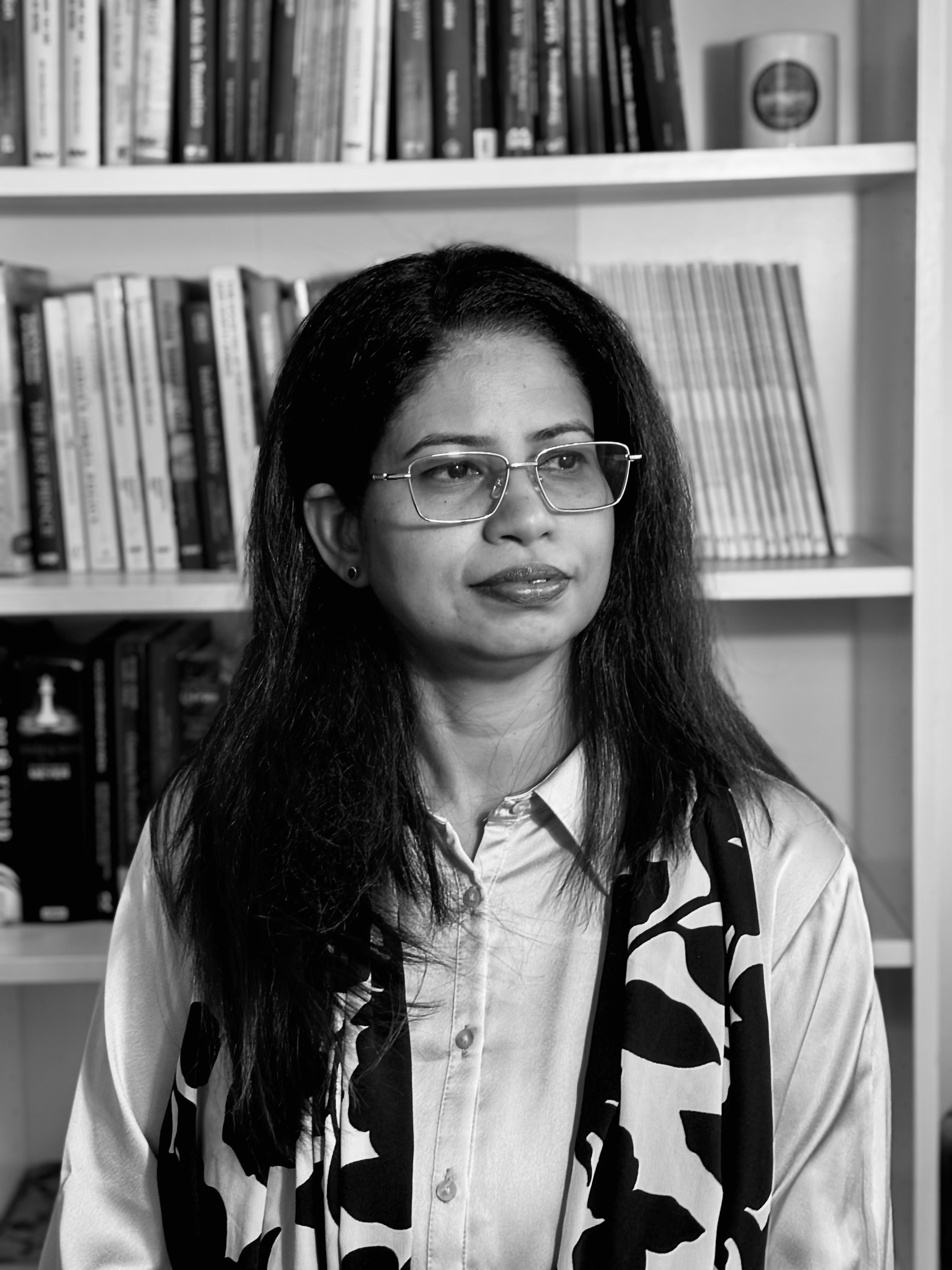
Sameena Hameed is a Professor in Middle Eastern Studies at Jawaharlal Nehru University, New Delhi. Her areas of specialization include the Middle Eastern economy, India's economic relations with the Middle East, and energy security issues. She has co-authored the book Persian Gulf 2024-25 India’s Relations with the Region (Palgrave Macmillan) and its previous volumes since 2020. She is also the Book Review Editor of the SAGE journal Contemporary Review of the Middle East and editor of books, Youth Bloom in GCC (2022), and COVID-19 in the Middle East and North Africa (2025). Besides, she has several monographs, journal articles, and chapters in edited volumes. In addition, she has prepared research papers and study reports for the Ministry of External Affairs and other trade and commerce organizations like ASSOCHAM. She has been a member of the MEA-constituted Select Group on Gulf and West Asia and of the Indian team for the 'India –GCC Strategic Partnership' project and the Indo-Saudi Dialogue.

The recently released data from the Tel Aviv Stock Exchange (TASE) shows that Israel bucked gl.....
While wars and military conflicts pose a security challenge, markets become jittery even before the .....
The India-Oman Comprehensive Economic Partnership (CEPA) has several unique aspects that can acceler.....
While world leaders, diplomats, and analysts debate the prospects of the Gaza peace plan.....
The recent slashing of growth prospects for the MENA (Middle East and North Africa) region this year.....
On May 17, the US blacklisted the Chinese telecommunications company Huawei and banned all business .....
The Gulf region is set to derive synergetic benefits of its multinational workforce and the multi-et.....
On 6 May,Turkey’s Supreme Electoral Council (YSK) annulled the results of the local electionsf.....
Gulshan Dietl, India and the Global Game of Gas Pipelines, (New York and London, Routledge.....