Breaking

... for openness and credibility....

- MENU
... for openness and credibility....
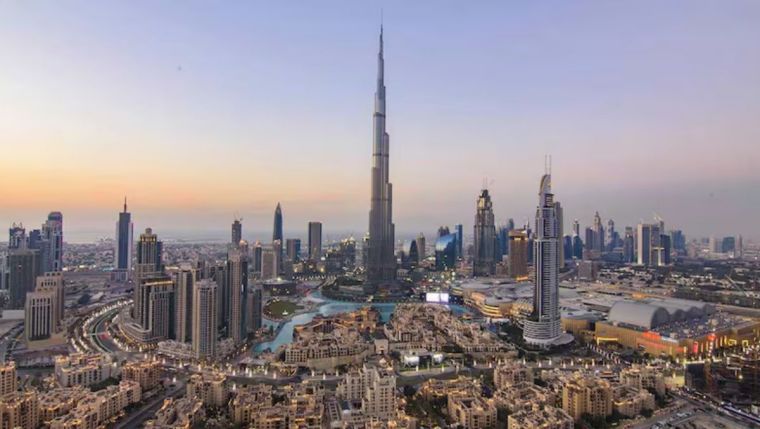
The recent slashing of growth prospects for the MENA (Middle East and North Africa) region this year by the World Bank and IMF to 2.6 per cent and 3 per cent, respectively, is a harbinger of greater political instability in the region. The pessimistic outlook for the region is partially due to the downward revision of the global growth forecast in the face of tariff wars and the risk of a global recession. The region was already witnessing a very low growth rate of 1.9 per cent in 2023, which moderately increased to 2.7 per cent in 2024. The phasing out of oil production cuts by the OPEC+ producers, with consequent implications for MENA oil exporters as global demand shows signs of weakening, is expected to have a cascading regional effect. Some oil-rich countries, like Saudi Arabia and Iraq, have swung back to fiscal deficits after having a surplus in 2022, and some of their infrastructure spending will be constrained.
Political conflicts in the region have been persistent and often coincide with various ethnic, sectarian, and religious fault lines. Despite abundant hydrocarbon reserves, the region has been trapped in a low-growth syndrome, offering far fewer economic opportunities for its rapidly growing youth population. Educated youth unemployment is the highest in the world, illustrating the limited absorptive capacity of these economies. Low regional economic growth makes the generation of employment opportunities to productively engage the predominantly young population a daunting task for governments. The dependence of the private sector on cheaper and more efficient expatriate workers in several countries has made governments’ efforts to generate employment for their nationals more challenging and complex.
Moreover, MENA is the most unequal region in the world, and its decade-long conflicts and the Covid pandemic have led to mass pauperisation, with millions experiencing multidimensional deprivation of opportunities and access to basic amenities. According to the World Bank, it is the only region in the world where poverty line (US$3.65) has increased over the past decade—from 12.3 per cent in 2010 to 18.1 per cent in 2023. This does not fully reflect the displacement and dispossession of people during the ongoing Gaza war and its regional spillover. The need for reconstruction of war-torn Iraq, Syria, Yemen, and the Gaza Strip, and the rehabilitation of displaced people, are among the most daunting tasks facing the region. Several countries, like Jordan, Turkey, and Lebanon, face tremendous pressure from refugee populations. Increasing socio-economic disparities have often created deep social fault lines that acquire political overtones and feed into geopolitical instability within countries and across the region.
The capacity of governments to appease their restive populations greatly depends on the flow of oil revenues in the oil-exporting countries and on the growth of the non-oil private sector in other countries of the region. As global growth comes under pressure and multilateral collaboration falters during Trump’s presidency, uncertainties remain over the flow of international aid and investment in the region. Arab countries have proposed a multi-billion-dollar reconstruction plan for the Gaza Strip in response to Trump’s suggestions of relocating Palestinians for Gaza’s reconstruction. However, much of the Arab initiative will hinge upon the growth of their economies and the flow of oil revenues. The apparent progress in US-Iran talks and the possibility of easing sanctions have had an impact on oil markets and investment. The possibility of more Iranian oil entering the international market—an estimated addition of 4 per cent to global supply—would put further pressure on the international oil price, which is on the decline. Even if the US-Iran deal remains a distant prospect, slowing global economic growth would inevitably reduce oil demand, with an expected fall in oil export revenues for the region’s oil producers unless OPEC+ production cuts are extended for the year.
In recent years, GCC countries have productively channelled oil revenues into economic diversification initiatives such as tourism, logistics, digital technologies, and knowledge sectors, generating both job opportunities and growth impetus. They have projected themselves as beacons of stability through fixed exchange rates and continuity in business-friendly policies, thus attracting their highest number of FDI projects in 2023. However, translating these investments into productivity gains through innovation and the skill development of nationals will be key to sustained non-oil growth and resilience to oil price cycles. During periods of low oil prices, several large projects are delayed or stalled. There are emerging reports of significant delays and financial struggles for flagship projects like Neom (Saudi Arabia). The domestic pressures of sustaining high public expenditure to meet the targets of their vision documents are likely to constrain their regional economic outreach in the face of low economic growth and a weaker international oil market. With conflicts raging and governments increasing military expenditures even as their economies falter, the wider population of the Middle East will be engulfed in greater economic uncertainty and political instability.
Professor Sameena Hameed teaches at the Centre for West Asian Studies, Jawaharlal Nehru University, New Delhi.
Note: This article was originally published in The Week on 01 May 2025 and has been reproduced with the permission of the author. Web Link
As part of its editorial policy, the MEI@ND standardizes spelling and date formats to make the text uniformly accessible and stylistically consistent. The views expressed here are those of the author and do not necessarily reflect the views/positions of the MEI@ND. Editor, MEI@ND: P R Kumaraswamy
Sameena Hameed is a Professor in Middle Eastern Studies at Jawaharlal Nehru University, New Delhi. Her areas of specialization include the Middle Eastern economy, India's economic relations with the Middle East, and energy security issues. She has co-authored the book Persian Gulf 2024-25 India’s Relations with the Region (Palgrave Macmillan) and its previous volumes since 2020. She is also the Book Review Editor of the SAGE journal Contemporary Review of the Middle East and editor of books, Youth Bloom in GCC (2022), and COVID-19 in the Middle East and North Africa (2025). Besides, she has several monographs, journal articles, and chapters in edited volumes. In addition, she has prepared research papers and study reports for the Ministry of External Affairs and other trade and commerce organizations like ASSOCHAM. She has been a member of the MEA-constituted Select Group on Gulf and West Asia and of the Indian team for the 'India –GCC Strategic Partnership' project and the Indo-Saudi Dialogue.

The recently released data from the Tel Aviv Stock Exchange (TASE) shows that Israel bucked gl.....

Many would be surprised that Lebanon has the second-largest gold reserves in the Middle East, behind.....
While wars and military conflicts pose a security challenge, markets become jittery even before the .....
The India-Oman Comprehensive Economic Partnership (CEPA) has several unique aspects that can acceler.....
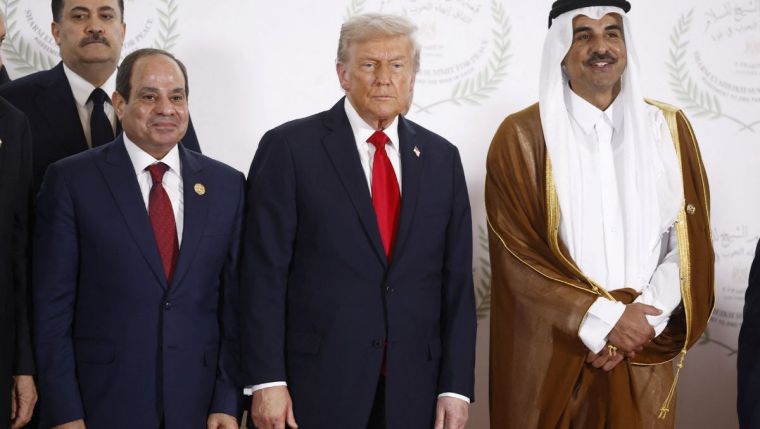
While world leaders, diplomats, and analysts debate the prospects of the Gaza peace plan.....
On May 17, the US blacklisted the Chinese telecommunications company Huawei and banned all business .....
The Gulf region is set to derive synergetic benefits of its multinational workforce and the multi-et.....
On 6 May,Turkey’s Supreme Electoral Council (YSK) annulled the results of the local electionsf.....
Gulshan Dietl, India and the Global Game of Gas Pipelines, (New York and London, Routledge.....