Breaking

... for openness and credibility....

- MENU
... for openness and credibility....
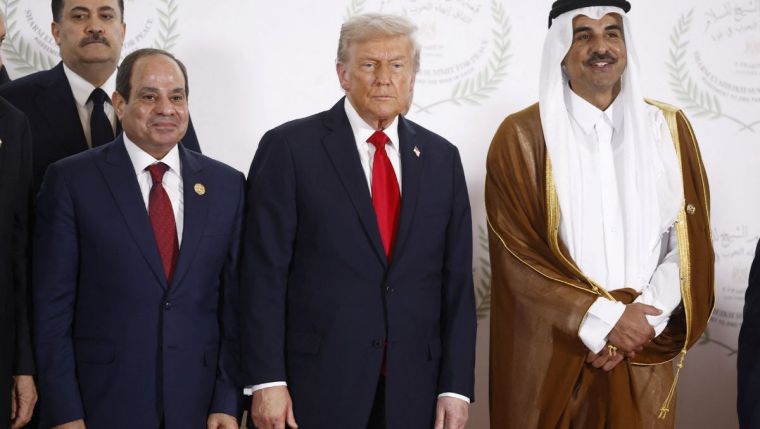
While world leaders, diplomats, and analysts debate the prospects of the Gaza peace plan signed in Sharm el-Sheikh on October 13, Egypt stands to benefit significantly. The summit, co-chaired by President Abdel Fattah el-Sisi and US President Donald Trump, reaffirmed Egypt's central role in regional diplomacy.
Egypt, the first country to sign a peace treaty with Israel in 1979, was politically boycotted by many Arab nations for nearly a decade. Nevertheless, it had to navigate a 'cold peace' characterised by low-profile engagement with Israel; it maintained the peace treaty, which was crucial in securing substantial US military and economic aid and in seeking to end its regional isolation.
Egypt's active involvement in mediating the Israel-Palestinian conflict reflects both a strategic need to prevent spillover along its border with Gaza and its desire to regain its traditional status as a leading supporter of the Palestinians. Prolonged conflict threatens Egypt's Sinai region with refugee pressures, arms smuggling, and militant infiltration. Egypt has consistently played a mediatory role in ceasefire agreements between Israel and Hamas and has also worked to facilitate reconciliation between Hamas and Fatah.
By co-hosting the Sharm conference, Egypt elevated its role from mediator to principal negotiator, aiming to forge a post-war Gaza administrative arrangement and a reconstruction framework. With only four countries—Egypt, the US, Turkey, and Qatar—signing the Gaza peace plan, and with limited publicly available details, the agreement's long-term future remains uncertain. However, its immediate consequences are of immense relief for all stakeholders and the international community: the release of all the remaining Israeli hostages and the halting of the large-scale casualties and destruction in the Gaza war.
Despite mounting regional pressure and an unprecedented humanitarian catastrophe unleashed by the Gaza War, none of the signatories to the Abraham Accords—the UAE, Bahrain, Sudan, and Morocco—severed diplomatic relations with Israel. While there were temporary recalls of ambassadors and suspensions of joint meetings and collaborative projects, diplomatic ties remained intact. In early 2023, Abu Dhabi National Company (ADNOC) and UK energy major BP announced plans to form a joint venture with a 50 per stake in Israel's upstream oil and gas company, NewMed Energy. These plans were put on hold as the Gaza war escalated through 2024. However, the UAE's commercial engagement with Israel remained resilient. According to the International Trade Centre, bilateral trade between the two countries increased from US$1.36 billion in 2023 to US$1.43 billion in 2024.
Beyond diplomacy, Egypt's economic interests, especially in the energy sector, stand to gain significantly from the summit,which has ended an emotionally and morally fraught period of suffering on both sides. While the Egyptian economy has gained some strength in recent times, revitalising the energy sector remains critical to sustain that momentum. Once an energy exporter, Egypt now faces declining domestic production and rapidly increasing domestic demand, making it increasingly reliant on costly imports. Its natural gas imports are primarily pipeline-based and predominantly sourced from Israel, supplying domestic power plants and liquefaction terminals, which enables LNG exports when domestic demand is low. Thus, piped natural gas supplies not only meet essential domestic energy needs but also bolster export revenues. Under the earlier 2019 deal, Egypt imported about 4.5 BCM per year of pipeline natural gas from Israel. According to the Middle East Economic Survey, Egypt imported a record 981 million cubic feet per day (mcfd) of piped gas from Israel in 2024, with monthly highs of 1.06 billion cfd in December 2024 and 1.08 billion cfd in April 2025.
In August 2025, Israel's NewMed Energy and its Leviathan gas field partners signed a landmark US$35 billion deal to export about 130 billion cubic meters (bcm) of natural gas to Egypt until 2040 or until the contract volume is fulfilled. The new agreement would increase the annual supply to 6.5 BCM in the near term and to 12 BCM under full capacity development. The total contracted volume has also increased significantly from 60-64 bcm to 130 bcm. Energy supplies are pivotal to Egypt's efforts to emerge as an attractive destination for foreign investments and showcase the potential of its large population and growing domestic market. A robust economy would lend greater weight to its regional diplomatic initiatives. Thus, while the future of the Gaza Strip and the specifics of the Palestinian state are open to speculation, Egypt's economic and political gains are certain.
Professor Sameena Hameed teaches at the Centre for West Asian Studies, Jawaharlal Nehru University, New Delhi.
Note: This article was originally published in The Week on 19 October 2025 and has been reproduced with the permission of the author. Web Link
As part of its editorial policy, the MEI@ND standardizes spelling and date formats to make the text uniformly accessible and stylistically consistent. The views expressed here are those of the author and do not necessarily reflect the views/positions of the MEI@ND. Editor, MEI@ND: P R Kumaraswamy
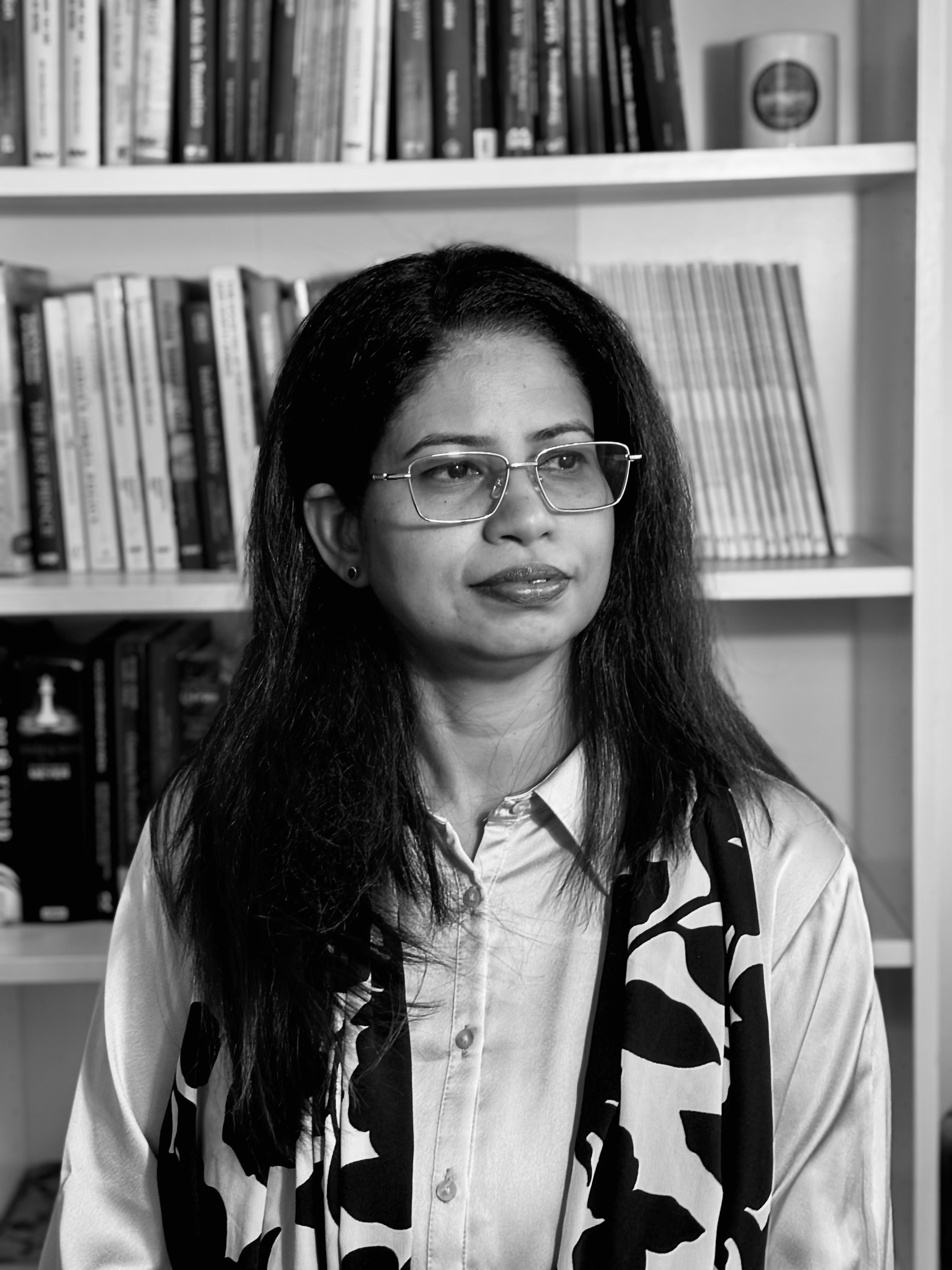
Sameena Hameed is a Professor in Middle Eastern Studies at Jawaharlal Nehru University, New Delhi. Her areas of specialization include the Middle Eastern economy, India's economic relations with the Middle East, and energy security issues. She has co-authored the book Persian Gulf 2024-25 India’s Relations with the Region (Palgrave Macmillan) and its previous volumes since 2020. She is also the Book Review Editor of the SAGE journal Contemporary Review of the Middle East and editor of books, Youth Bloom in GCC (2022), and COVID-19 in the Middle East and North Africa (2025). Besides, she has several monographs, journal articles, and chapters in edited volumes. In addition, she has prepared research papers and study reports for the Ministry of External Affairs and other trade and commerce organizations like ASSOCHAM. She has been a member of the MEA-constituted Select Group on Gulf and West Asia and of the Indian team for the 'India –GCC Strategic Partnership' project and the Indo-Saudi Dialogue.

The recently released data from the Tel Aviv Stock Exchange (TASE) shows that Israel bucked gl.....

Many would be surprised that Lebanon has the second-largest gold reserves in the Middle East, behind.....
While wars and military conflicts pose a security challenge, markets become jittery even before the .....
The India-Oman Comprehensive Economic Partnership (CEPA) has several unique aspects that can acceler.....
The recent slashing of growth prospects for the MENA (Middle East and North Africa) region this year.....
On May 17, the US blacklisted the Chinese telecommunications company Huawei and banned all business .....
The Gulf region is set to derive synergetic benefits of its multinational workforce and the multi-et.....
On 6 May,Turkey’s Supreme Electoral Council (YSK) annulled the results of the local electionsf.....
Gulshan Dietl, India and the Global Game of Gas Pipelines, (New York and London, Routledge.....