Breaking

... for openness and credibility....

- MENU
... for openness and credibility....

The political landscape of Israel in 2026 is characterised by an ongoing conflict surrounding the Strait of Hormuz, domestic instabilities, and, most importantly, the
fracturing of traditional electoral blocs. As the nation prepares for the 26th legislative elections, due on 27 October, Prime Minister Benjamin Netanyahu and his Likud face a battle for political survival. Due to formidable opposition from centrist and moderate-right factions, Netanyahu’s reliance on his traditional right-wing, far-right, and ultra-Orthodox coalition partners has reached its zenith. Within this broader coalition, the ultra-Orthodox parties, such as Shas (Sephardim) and United Torah Judaism (UTJ) (Ashkenazim), comprising Agudat Yisrael and Degel HaTorah, strategically leverage Netanyahu’s coalition ambitions to advance their own objectives ahead of the upcoming Knesset elections.
The Knesset uses a 120-seat proportional representation system, yet no single party could form a government on its own, requiring a coalition to reach the 61-seat majority. Since the late 20th century, Netanyahu’s Likud has anchored its governance on a relatively stable alliance with nationalist and ultra-Orthodox parties. However, political support among nationalists, Likud's primary voters, has significantly eroded as of mid-2026. Parties with similar aspirations joining Netanyahu’s coalition would be highly unlikely, making these ultra-Orthodox parties the natural allies.
Shas and UTJ have a fixed voter base, and together they command a significant portion of the electorate, translating to a bloc of roughly 15–17 seats. Because the modern Israeli centre-left bloc has increasingly aligned around secularist principles and a demand for universal civic burdens, there is no room for these Haredi parties to form an alternative coalition. Instead, they recognise the need for a right-wing government to secure their sectoral interests and understand Likud’s need for their seats. This, in turn, allows Haredi leadership the freedom to negotiate with absolute rigidity by demanding tangible and immediate dividends.
Firstly, the ongoing crisis regarding military conscription. The extensive and draining military engagements with Iranian proxies have drastically amplified secular and national-religious resentment towards the military exemptions granted to yeshiva students. The High Court has mandated the state to enforce the draft and to cease financial subsidies to non-compliant religious institutions. This judicial intervention triggered a backlash among the Haredi parties, who began demanding the immediate passage of legislation that protects draft evaders from arrest and economic sanctions through amendments to the Basic Law: Torah Study, which protects all these exceptions for yeshiva students and declares Torah study a foundational value of the state.
The strategic brilliance of these Haredi parties was timely, as they are moving to pass the bill before the current Knesset dissolves. Factions within UTJ have explicitly stated that their future loyalty to Netanyahu would depend on passing the bill, saying, ‘First you pass the laws, then we talk.’ By demanding this, Shas and UTJ ensure that their core ideological and demographic requirements are secured regardless of the electoral outcome, and are fully aware of the importance of Netanyahu remaining in office.
Secondly, the ambition to fulfil their financial and institutional autonomy. Both Shas and UTJ operate as highly disciplined interest groups dedicated to preserving their distinct sociological enclaves. Moreover, in addition to their main motive of saving yeshiva students from military conscription, these parties aim to secure state funding for their educational institutions, maximise housing subsidies for large Haredi families, and guarantee robust financial stipends for full-time Torah scholars.
Despite severe economic problems stemming from the war, reallocating state resources to the Haredi sector has been largely unwelcome among general taxpayers. Nevertheless, Shas and UTJ successfully overcome this friction and extract financial rents by leveraging their indispensable status within the coalition. They employ the state budget as a hostage, threatening to leave the government if it is compromised. Netanyahu, prioritising his survival over existing macroeconomic issues, remains captive to their demands. It came at a cost: one, public opinion polling indicates that his core voter base seems to be abandoning him; two, there is growing cynicism among his party members over his immense loyalty towards the ultra-Orthodox parties.
As Israel approaches the Knesset election, the strategic supremacy of Shas and UTJ remains a defining feature of the political ecosystem. By issuing legislative ultimatums on benefits for the Haredi sector before the dissolution of the current government, these two parties have ultimately succeeded in exploiting Netanyahu’s future political endeavours.
The author is a Doctoral Candidate at the Centre for West Asian Studies, Jawaharlal Nehru University, New Delhi.
Note: This article was originally published in The Week on 12 July 2026 and has been reproduced with the permission of the author. Web Link
As part of its editorial policy, the MEI@ND standardizes spelling and date formats to make the text uniformly accessible and stylistically consistent. The views expressed here are those of the author and do not necessarily reflect the views/positions of the MEI@ND. Editor, MEI@ND: P R Kumaraswamy

Nirmalshankar M is a doctoral candidate at the Centre for West Asian Studies, Jawaharlal Nehru University, New Delhi.

Social media platforms such as TikTok, Telegram, Facebook, and WhatsApp are often used to spread mis.....

The trajectory of Kahanism in Israeli politics represents one of the consequential ideological shift.....
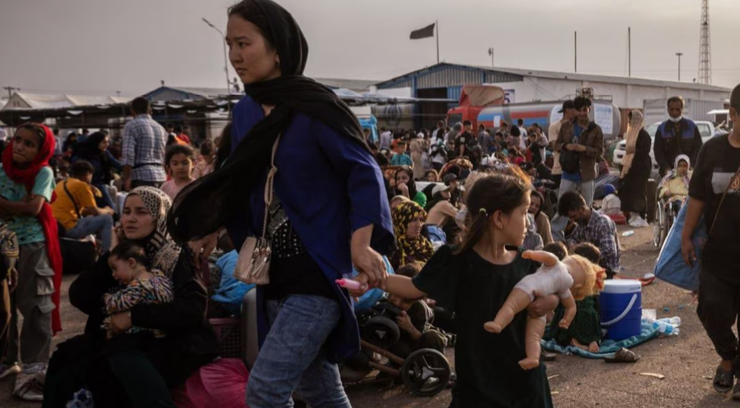
The protracted conflict in Syria has driven millions of individuals across international borders, al.....
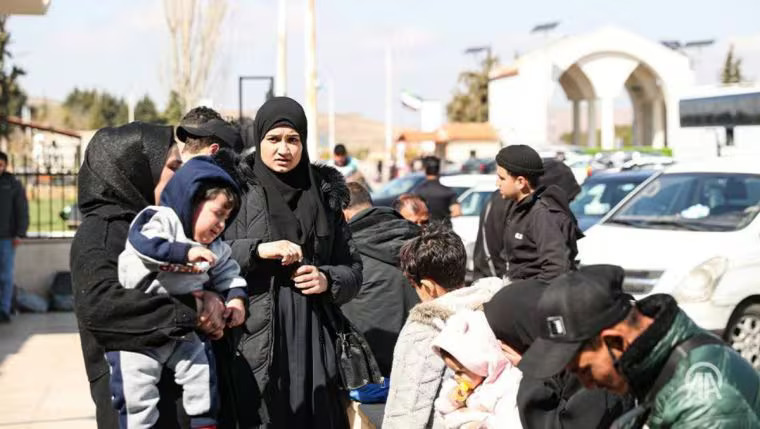
The historic political transition in Syria during December 2024 brought an end to decades of Ba&rsqu.....
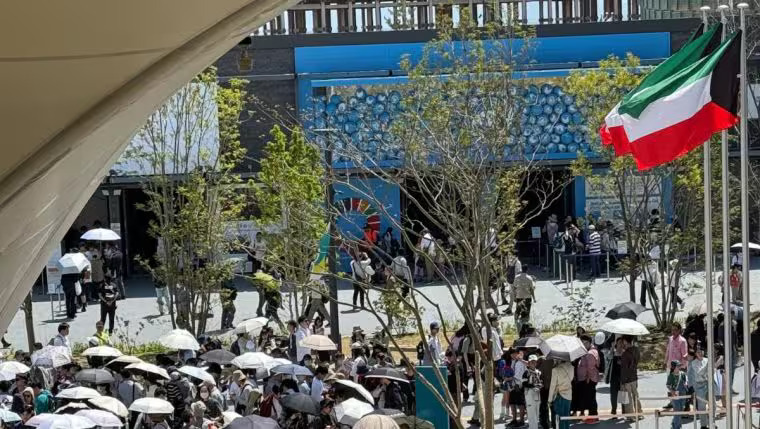
One of the persistent issues in the Middle East is the status of the Bidoon (stateless) in Kuwait. T.....
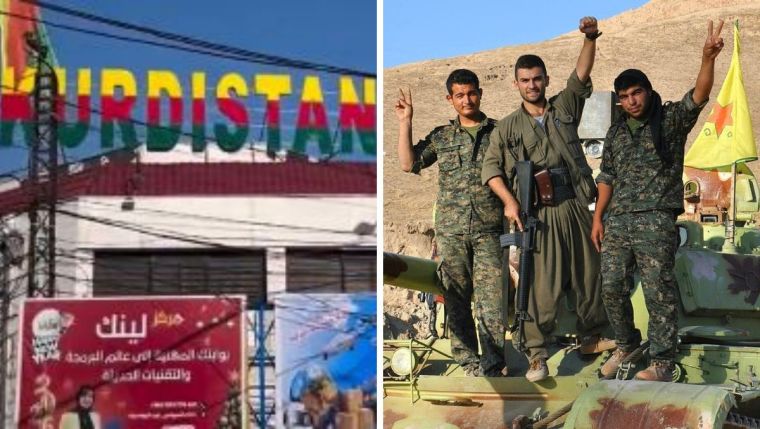
The Kurdistan Region of Iraq (KRI) sits at a unique geopolitical crossroads, bordering Syria, Tü.....
In recent years, the feminisation of migration in the Middle East and North Africa (MENA) region has.....
The ongoing escalation of the Iran-Israel conflict has triggered a major migration crisis in the Mid.....
The humanitarian situation in Yemen is described as the world’s most severe manufactured catas.....
Every second day, media headlines blare: migrants and refugees subjected to systematic violence.....

The recent release of an audio file containing the conversation between Jeffrey Epstein and Ehud Bar.....

The Kingdom of Saudi Arabia is actively reshaping its demographic and security landscape as pa.....
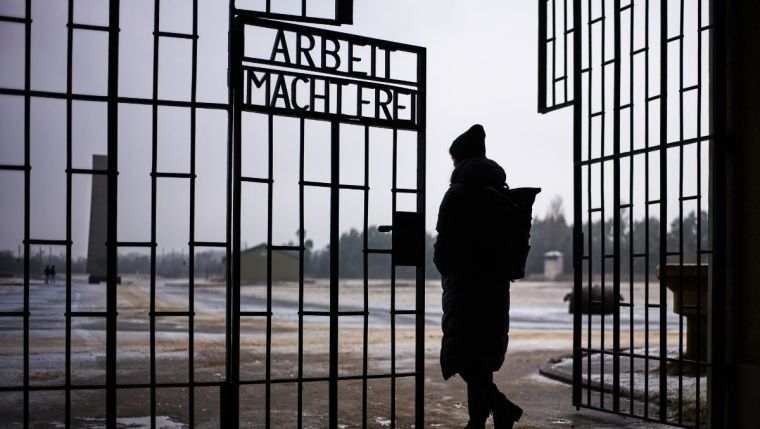
As the world marks the International Day of Commemoration in Memory of the Victims of the Holocaust .....

For decades, the Kingdom of Morocco was viewed almost exclusively as a ‘transit country’.....
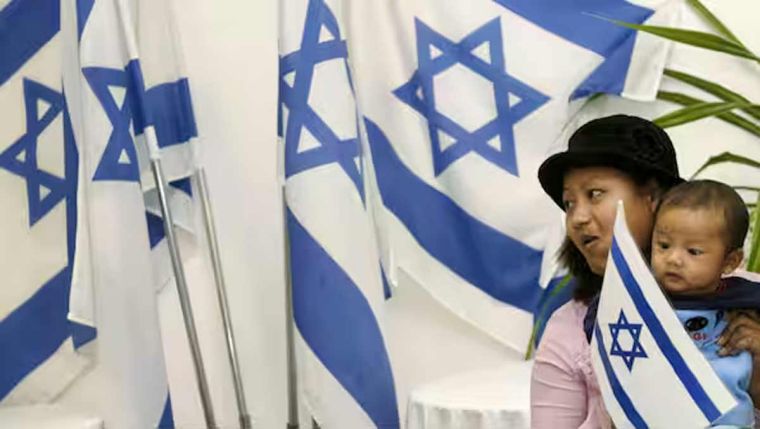
The Bnei Menashe, also known as ‘Sons of Menashe,’ are indigenous people within the Kuki.....
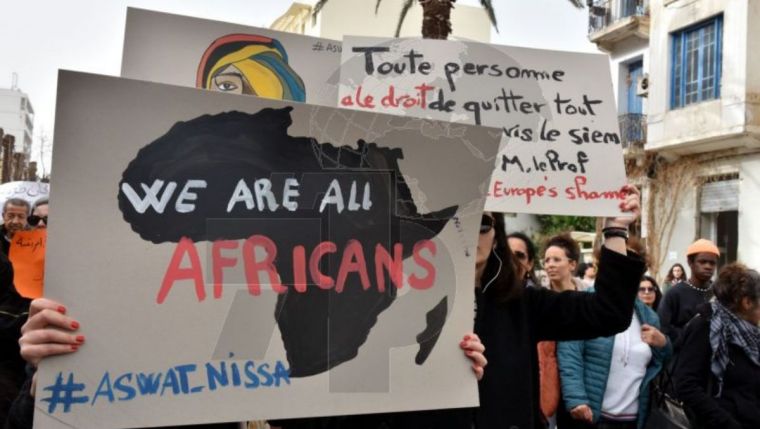
Earlier this month, Tunisia declared that it would not become a transit zone for migrants. In .....

According to the United Nations International Organisation for Migration (IOM), this week, 42 migran.....
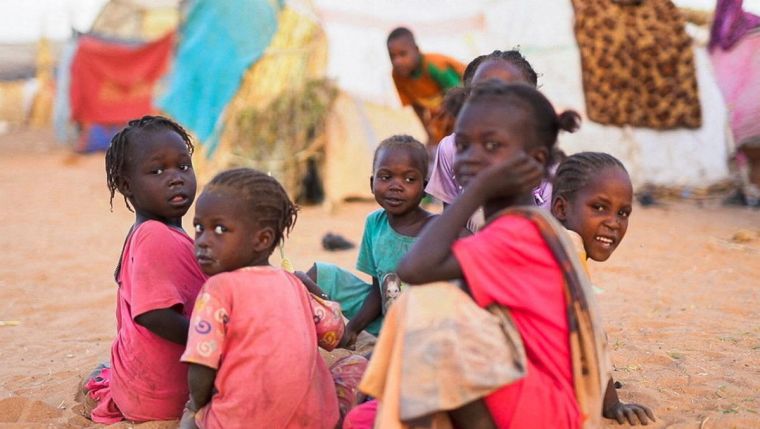
Egypt stands at a critical juncture between two of the world’s most devastating humanitarian c.....
The Islamic Republic of Iran, with decades of international sanctions and mounting internal financia.....
Last week, the UN warned that the new humanitarian catastrophe in Yemen, marked by acute food .....
The return of Syrian refugees from Lebanon is widely viewed as a positive development, but it also h.....
Even as rockets fell over homes and cities, planeloads of immigrants continued to land at Ben-Gurion.....