Breaking

... for openness and credibility....

- MENU
... for openness and credibility....
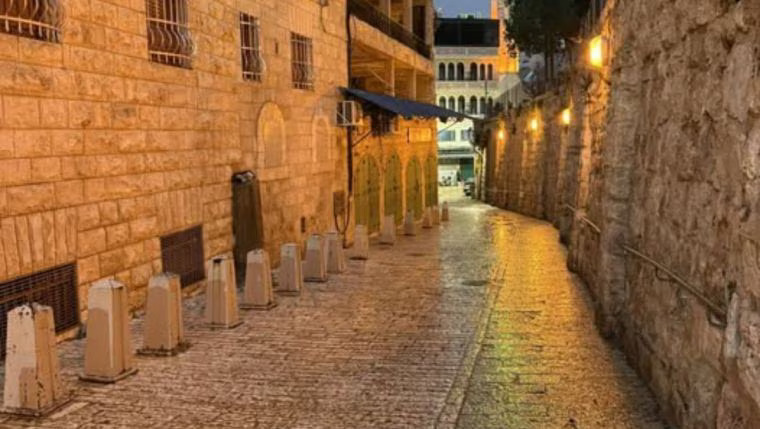
Amid the ongoing war in the Middle East, the usually well-trodden path of the Via Dolorosa in Jerusalem remains largely empty this Good Friday, heavily barricaded, rather than filled with the chants of the faithful. The carefully maintained “Status Quo”, an administrative arrangement governing Jerusalem’s holy sites since the Ottoman era, appears to be under unprecedented pressure. Not only has the status quo been challenged, but it has also, at times, been bypassed by the “security-first” priorities of Israel.
This shifting reality was clearly evident in a recent incident that made headlines. The Latin Patriarch, Cardinal Pierbattista Pizzaballa, was prevented from entering the Church of the Holy Sepulchre on Palm Sunday. For many observers, this was seen as signalling a potential shift: that religious access in the Holy Land, long treated as an established right under historical arrangements, may increasingly be subject to state discretion.
On Palm Sunday, the Israeli police prevented the Patriarch from entering the church, citing security concerns over a possible missile strike. The move shocked the global Christian community and raised questions about the continued robustness of the 1852 Status Quo. However, under international pressure from the Vatican, France and several other European countries, access was eventually granted after Prime Minister Benjamin Netanyahu personally intervened. The episode has left a lingering question: must even the highest Catholic authority in Jerusalem depend on executive approval to enter one of Christianity’s holiest sites?
The Christian experience during Holy Week reflects, in part, the restrictions imposed on Muslim worshippers. Access to the Al-Aqsa Mosque has also been significantly curtailed under security provisions in recent weeks. Nearly one-fifth of Israel’s population comprises Muslims and a much smaller Christian minority, and these measures have highlighted the shared vulnerabilities of these communities.
The lack of bomb shelters and the narrow lanes of the Old City lend weight to the state’s security concerns. However, critics point to a perceived disparity in enforcement. While the Western Wall has, at times, continued to host small groups of Jewish worshippers in controlled conditions, Christians and Muslims have faced far stricter limitations at their respective holy sites. Whether this reflects uneven prioritisation, limited security capacity or broader patterns of exclusion remains a matter of debate. What is clearer, however, is that this moment has fostered an unusual degree of interfaith concern, with joint warnings about the gradual erosion of Jerusalem’s multi-religious character.
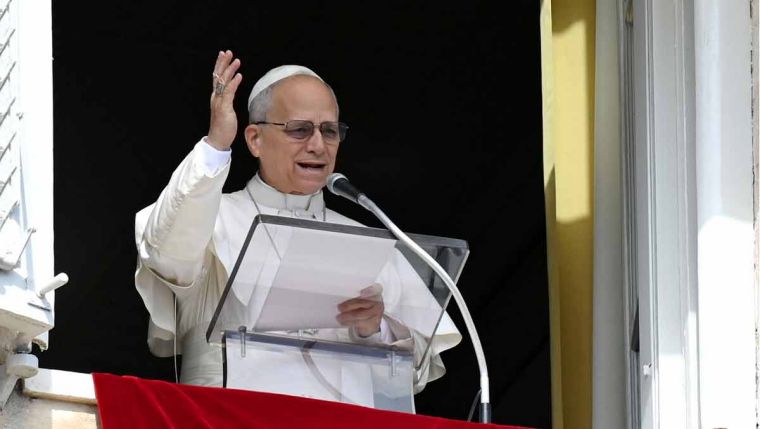
As the moment prompts a reckoning with the Catholic Church’s own legacy, tensions escalated when Pope Leo XIV cited Isaiah 1:15, declaring that God does not hear the prayers of those “whose hands are full of blood”. The words carry a powerful moral weight, though they also sit within a long and layered past. Episodes such as the Crusades, marked by violence and shaped by the politics of their time, remain difficult chapters in Christian history, just as conflict and suffering have marked many civilisations across centuries. Today, many Christians find themselves among those affected by violence and displacement, prompting a broader reflection on how histories of power, faith and conflict continue to echo in the present.
For the shrinking Middle Eastern Christian minority, this Good Friday feels like an existential Via Crucis. Recent reports, including those by the Rossing Centre, have documented rising instances of harassment against Christian communities, leaving them increasingly exposed.
The latest restrictions surrounding the Holy Sepulchre may come to mark a turning point for a 19th-century administrative framework. The Status Quo was created for an era of competing empires, not for the modern security state and its exceptional measures. As the world observes a subdued Good Friday, Jerusalem—especially the Old City—appears to be shifting from an internationalised holy city to a more tightly securitised urban centre.
The phrase “blood on the hands” is no longer merely metaphorical; for many, it reflects a lived and immediate reality of conflict. Some may interpret the current moment through the lens of history and moral reflection, while others may see it primarily as the outcome of contemporary security imperatives. What remains clear is that the delicate balance governing Jerusalem’s sacred spaces is under profound strain.
The author is a doctoral candidate at the Centre for West Asian Studies, Jawaharlal Nehru University, New Delhi.
Note: This article was originally published in The Week on 3 April 2026 and has been reproduced with the permission of the author. Web Link
As part of its editorial policy, the MEI@ND standardizes spelling and date formats to make the text uniformly accessible and stylistically consistent. The views expressed here are those of the author and do not necessarily reflect the views/positions of the MEI@ND. Editor, MEI@ND: P R Kumaraswamy
Mahin Siddiqui is a doctoral candidate at the Centre for West Asian Studies, Jawaharlal Nehru University, New Delhi.
Qatar is a frequent yet sophisticated broker in global diplomacy, manoeuvring key deals to maintain .....
The Middle East primarily constitutes a Muslim population, except Israel, where Jews are the majorit.....
Pope Leo XIV’s visit to Algeria is planned for April 2026. This will be the first visit by a R.....
Was the end of February a turning point in power? Whether February 28 shook Iran or not, the killing.....
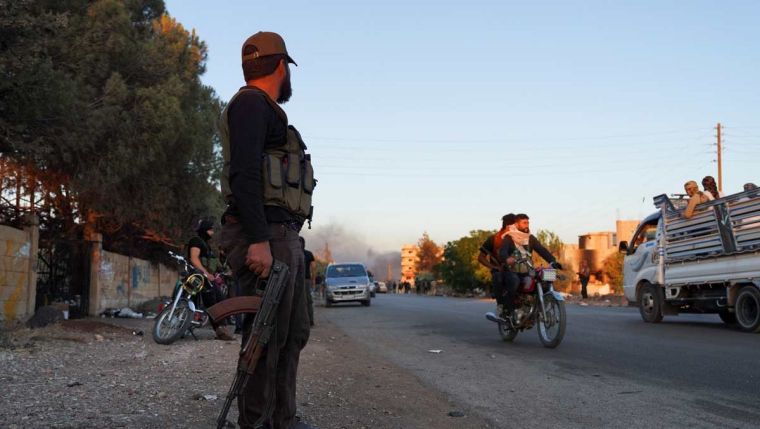
The visuals of February in Syria began with security forces entering the Kurdish city of Qamishli, w.....
Today, January 7, the air is filled with the sound of bells, and the scent of incense accentuates th.....
The demands of the Alawites in Syria are precise; rather than crying out for help and longing for Ba.....
Marking 18 December as the International Day against Colonialism, the United Nations General Assembl.....
Pope Leo XIV, who succeeded Pope Francis in May, marked a significant step and began his modern reli.....
The Iraqi parliamentary election of 11 November 2025 was not a moment for democratic renewal; rather.....
The painful contradiction of the Israeli social contract has crystallised in recent weeks, accentuat.....
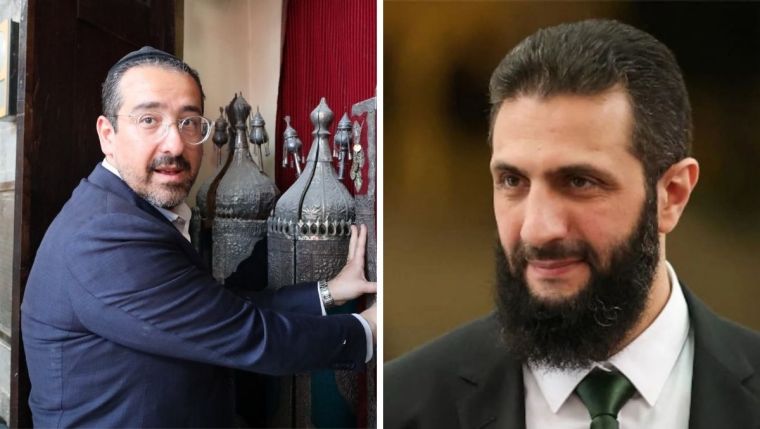
Syrian-American Henry Hamra’s neoteric candidacy in Damascus for a seat in the parliament elec.....

In 2024, China endorsed a deal worth US$5.6 billion to establish the Gotion High-Tech gigafactory in.....
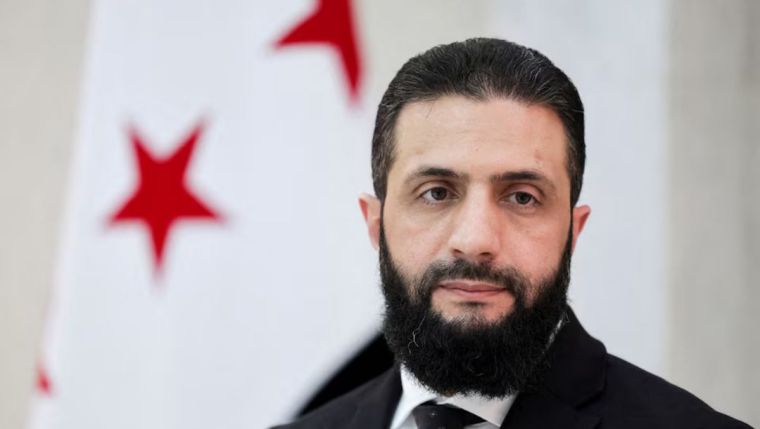
President Bashar Al Assad’s fall last December was a long-awaited harbinger of hope for Syria......